RERA Explained: What Every Home Buyer in Madurai Should Know
If you’ve been house-hunting lately, chances are you’ve come across the term RERA more than once — on brochures, in builder conversations, maybe even printed at the bottom of an advertisement in tiny font. Most people nod along like they know what it means. Truth is, a lot of buyers don’t, and that’s exactly the gap this post is meant to fill.
Let’s break it down in plain language.
So, what is RERA?
RERA stands for the Real Estate (Regulation and Development) Act. It came into effect in 2016, and Tamil Nadu has its own version of it — TNRERA — which oversees real estate projects within the state, including here in Madurai.
Before RERA, the real estate industry in India ran on a lot of trust and very little accountability. Buyers would book a flat based on a brochure and a promise, hand over their hard-earned savings, and then wait — sometimes years past the promised date — hoping the project would actually get finished the way it was pitched. RERA was introduced to fix exactly that problem.
What RERA actually does
At its core, RERA exists to protect the buyer and bring some discipline into how developers operate. A few things it requires:
Every project has to be registered. Before a builder can even market or sell units in a project, it needs to be registered with the state’s RERA authority. That registration includes real details — the land title, approved layout, promised timeline, and so on. Nothing vague.
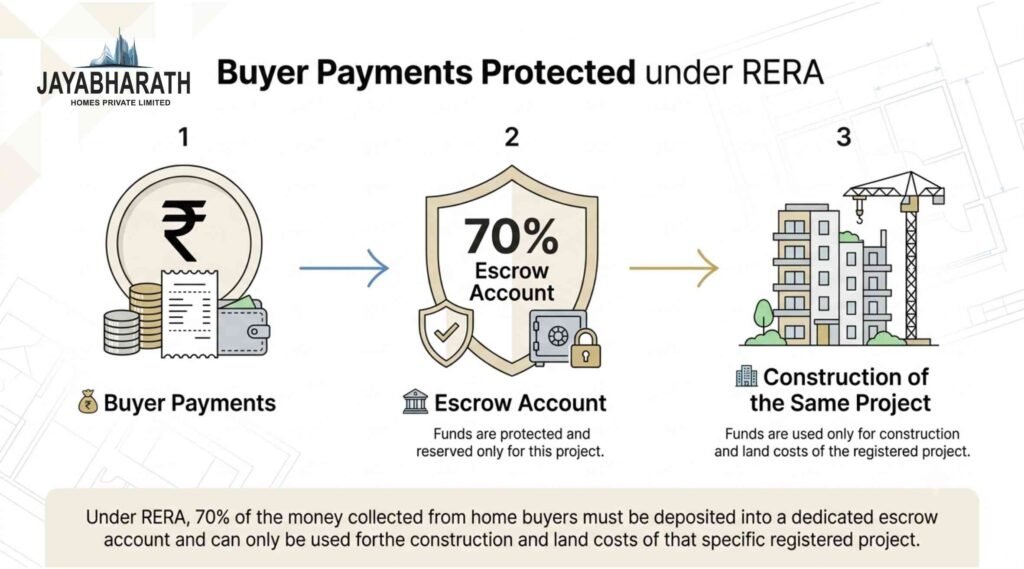
Money can’t just disappear into other projects. This is a big one. RERA mandates that 70% of the funds collected from buyers for a project be kept in a separate escrow account, used only for the construction and land costs of that specific project. This stops the old practice of builders using one project’s funds to complete a different, unrelated project while yours sits half-built.
Delays come with consequences. If a builder misses the promised handover date, buyers are entitled to compensation or a refund with interest. That’s a meaningful shift in power — the timeline written in your agreement actually means something now.
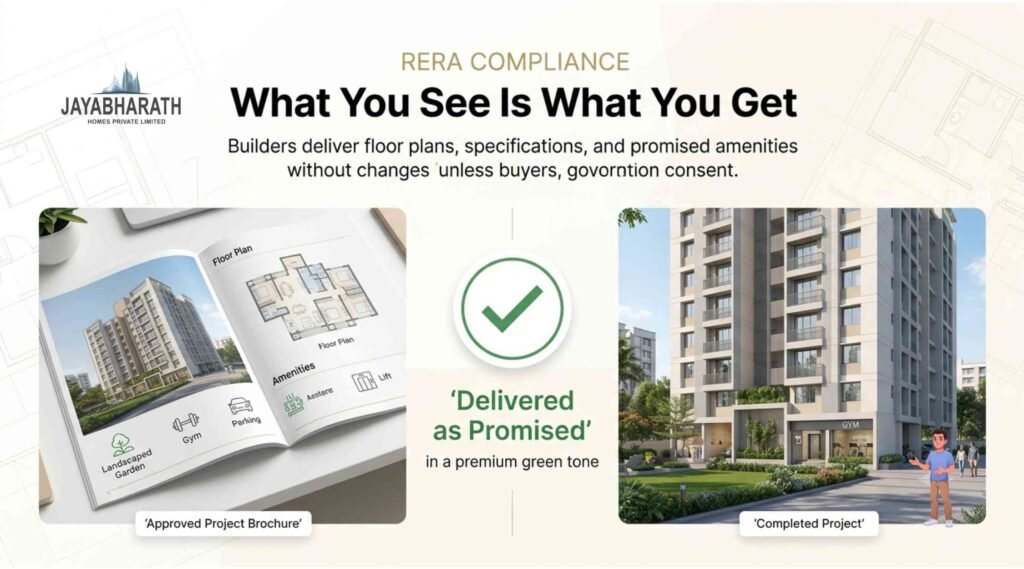
What you see is what you get. Builders can no longer casually change floor plans, specifications, or promised amenities after you’ve bought a unit, without your consent. If the brochure said a garden and a gym, that’s what’s meant to be delivered.
There’s a place to complain. If something does go wrong, buyers have a formal route — the RERA authority and appellate tribunal — instead of dragging things through years of civil court.
Why this matters when you're actually buying
Here’s the practical part. Before you sign anything or make a booking, it’s worth doing one simple thing: look up the project’s RERA registration number and check it on the TNRERA website. It takes a few minutes, and it tells you a lot — the promised completion date, the sanctioned layout, litigation history if any, and the developer’s track record with other registered projects.
A quick word from us
We’re not writing this just to check a box on compliance. Honestly, we think an informed buyer makes for a smoother relationship on both sides — fewer surprises, fewer misunderstandings, and a lot more trust. Every project we take up is registered under TNRERA, and we’re happy to walk you through the registration details, the timelines, and anything else you want to verify before you commit to anything.
Buying a home is one of the biggest decisions most people make. It shouldn’t feel like a leap of faith — and with RERA in place, it doesn’t have to.
Have questions about RERA or an ongoing project?Reach out to us — we’re always glad to talk it through.