buy plots in madurai

Home buyers discussing a residential project with a property developer in Madurai

Madurai Promoters: How to Choose the Best Developer | Jayabharath Homes

Madurai Promoters: A Complete Guide to Choosing the Best Property Developer in Madurai Choosing among Madurai promoters is one of the most important decisions a home buyer makes. A home is a long-term investment, so the right property developer should offer more than an attractive brochure or a competitive price. You should look for transparent documentation, a practical location, construction quality, clear specifications, realistic timelines, responsive customer support, and a project that suits your family’s lifestyle. Whether you are looking for an apartment in Madurai, a plotted development, or premium villas in Madurai, this guide will help you compare developers with confidence. The Tamil Nadu Real Estate Regulatory Authority (TNRERA) regulates and promotes the state’s real-estate sector, and its portal provides project and promoter information that buyers can use during due diligence. TNRERA states that real-estate projects and agents must be registered, and that promoters must upload project information, approvals, and other required details on the portal. At Jayabharath Homes, one of the trusted builders in Madurai, we believe informed buyers make better property decisions. Use this guide as a practical checklist before booking your dream home. Important disclaimer: This article is for general education only. It is not legal, tax, financial, engineering, or investment advice. Before booking a property, verify documents independently with a qualified advocate, chartered accountant, architect, engineer, bank, or other relevant professional. What Are Madurai Promoters? The term Madurai promoters generally refers to property developers, builders, land developers, and real-estate companies that plan, develop, market, and deliver residential or commercial projects in and around Madurai. Depending on the type of project, a promoter may handle: Land identification and acquisition. Layout planning and design. Statutory approvals and registrations. Construction planning and contractor coordination. Sales, customer documentation, and payment schedules. Handover, possession, and post-handover support. Common-area development and maintenance arrangements. Under RERA terminology, a “promoter” is broadly the person or entity that constructs or causes construction of an independent building or project for sale, or develops land into plots for sale. The specific legal definition and obligations should be checked against the applicable law and project facts. Why Choosing the Right Property Developer Matters The developer you choose can affect every stage of your home-buying journey—from the reliability of the documents and quality of construction to possession communication and support after handover. Legal Clarity and Document Transparency A reliable developer should be able to provide project details, approvals, title-related documents, sanctioned plans, specifications, and agreement terms in a clear manner. Before paying a booking amount, verify the project on the official TNRERA portal where applicable. TNRERA provides searchable records for registered building and layout projects, including promoter names, project details, approvals, and completion information. Construction Quality and Specifications Construction quality affects safety, comfort, maintenance costs, resale value, and day-to-day living. Do not rely only on model-unit finishes or marketing images. Ask for written specifications covering: Structural system and materials. Wall and flooring finishes. Electrical wiring, switches, and fixtures. Plumbing lines and sanitary fittings. Doors, windows, and glass specifications. Waterproofing treatment. Lift, generator, water supply, and drainage provisions. Common-area finishes. Parking details. Brand names or equivalent-quality clauses. Delivery Track Record and Timeline Communication A developer’s past completed projects can reveal a lot about workmanship, design consistency, amenities, and customer support. Visit completed communities if possible and speak with existing residents about their actual experience. Also review the project’s declared completion date and progress disclosures. Official RERA guidance and project portals are intended to help buyers review project information and track relevant updates. After-Sales Service A property purchase does not end at registration or possession. Ask how the developer handles snag rectification, handover documentation, maintenance transition, common-area defects, and customer-service requests. A clear process for after-sales support is often a strong sign of an organised developer. 10 Factors to Compare Madurai Promoters 1. Check TNRERA Registration and Project Details For projects covered by RERA, verify the registration number, developer name, project address, validity, approvals, declared completion date, and documents through the official TNRERA portal. TNRERA says promoters are required to upload proposed-project details, registration information, booked units or plots, and approval details. Check that the details match: The brochure and marketing material. Project name and location. Promoter’s legal entity name. Survey number or land details where shown. Unit type and carpet-area details. Expected completion or possession date. Amenities and project phase. TNRERA also publishes lists of building and layout projects with details including promoter name, project address, approvals, and project completion information. 2. Verify Land Title and Approvals Independently A project may look impressive, but legal due diligence is essential. Engage a qualified property advocate to verify the title chain, encumbrance certificate, land use, approvals, access rights, and relevant legal records. Ask for and professionally verify, as applicable: Parent documents and title documents. Encumbrance certificate. Approved building or layout plan. Planning authority approvals. Commencement permission where applicable. RERA registration and disclosures. Property tax and utility records where relevant. Power of attorney or development agreement, if applicable. Litigation or encumbrance disclosures. Completion and occupancy documentation at the appropriate stage. Do not rely solely on photocopies, verbal assurances, online listings, or a developer’s sales presentation. 3. Study the Developer’s Completed Projects Visit at least one or two completed projects developed by the promoter. A site visit lets you evaluate real workmanship rather than only sample-flat styling. Observe: Condition of external paint and facade. Quality of driveways, drainage, landscaping, and common areas. Water management and cleanliness. Lift operation and backup systems. Parking circulation. Wall cracks, seepage, tile quality, and finishing. Security arrangements. Resident feedback on maintenance and service. Overall liveability after occupancy. This is one of the best ways to compare top builders in Madurai with lesser-known or newer developers. 4. Read the Agreement Before Paying Major Amounts The agreement for sale is a crucial legal document. Review it with an independent advocate before signing or making a substantial payment. Confirm that it clearly states: Buyer and promoter names. Project and unit identification. Carpet area and measurement basis. Total consideration and payment

Madurai Promoters: How to Choose the Best Developer | Jayabharath Homes Read More »

Modern south-facing house with shaded entrance and landscaped outdoor area

South Facing House Vastu: Benefits, Myths & Tips | Jayabharath Homes

South Facing House Vastu: Benefits, Myths and Essential Tips for Homebuyers A south-facing property is often misunderstood by home buyers. Many people assume that a south-facing home is automatically unfavourable, but South Facing House Vastu is more nuanced than a simple “good” or “bad” label. In traditional Vastu terminology, a house is generally called south-facing when the main entrance or front side faces south. Common Vastu guidance places strong importance on the exact position of the main entrance, room layout, plot planning, sunlight, ventilation, and overall spatial balance—not merely the home’s facing direction. Whether you are considering an apartment in Madurai or premium villas in Madurai, this guide explains the benefits, common myths, practical planning points, and questions to ask before choosing a south-facing property. At Jayabharath Homes, one of the trusted builders in Madurai, we believe that buyers should select a home based on practical factors such as layout, natural light, ventilation, location, legal clarity, construction quality, and personal preferences—along with Vastu, if it matters to them. What Is a South-Facing House? A house is usually described as south-facing when its main entrance, front elevation, or primary approach faces the south direction. In simple terms, if you face south while standing outside and looking towards the main entrance, it is generally treated as a south-facing property. However, different Vastu practitioners may assess the property orientation using the main door, plot direction, road location, or the direction a person faces while leaving the home. For this reason, buyers should confirm the actual orientation using an accurate compass, approved floor plan, and site visit. How to Check Whether a House Is South-Facing To identify the orientation of a home: Stand at the main entrance facing outward. Use a reliable compass app or physical compass. Check the direction you face when exiting the property. Review the site plan and plot orientation with the developer or architect. Confirm whether the main entrance is located on the south side of the building or plot. If Vastu is important to your family, avoid relying only on brochure labels such as “south-facing.” Ask for the floor plan, site orientation, entrance location, and a physical site visit. Is a South-Facing House Good or Bad as per Vastu? A south-facing house is not automatically good or bad. Traditional Vastu guidance generally considers the exact entrance position, layout, room placement, plot proportions, and spatial balance more important than the facing direction alone. A thoughtfully planned south-facing home can be comfortable and desirable. Similarly, a poorly designed north-, east-, or west-facing home can have practical drawbacks such as harsh sunlight, insufficient ventilation, poor privacy, or inefficient room layouts. The right question is not only, “Is this house south-facing?” Instead, ask: Where exactly is the main entrance located? Is the layout functional for the family? Does the home receive adequate daylight and ventilation? Are the bedrooms, kitchen, bathrooms, and utility spaces well planned? Does the project have proper approvals and quality construction? Is the property comfortable in Madurai’s climate? Common Myths About South-Facing Homes Myth 1: Every South-Facing House Is Inauspicious This is the most common misconception. Vastu sources consistently state that south-facing homes are not inherently negative; entrance placement and the overall plan are important considerations. A south-facing home can work well when it is designed with a practical floor plan, suitable openings, shading, ventilation, and a layout that fits the homeowner’s needs. Myth 2: South-Facing Homes Have No Benefits South-facing homes can receive substantial daylight, particularly sunlight from the southern sky. In India, which lies north of the equator, south-facing facades may receive useful winter sunlight. The benefit depends on how the building handles heat. Proper shading, recessed windows, roof overhangs, verandas, landscaping, and appropriate glazing can help control direct sunlight and improve comfort. Myth 3: Only North- and East-Facing Houses Are Good No direction guarantees a better home by itself. A home’s comfort and long-term value depend on location, legal verification, construction quality, floor-plan efficiency, daylight, ventilation, privacy, maintenance, and resale demand. Many families focus on Vastu while searching for an apartment in Madurai or a villa in Madurai, but the project’s quality and suitability for the family’s lifestyle should remain the main priority. Myth 4: A Single Remedy Can Fix Every Layout Issue Vastu remedies are belief-based and personal. They should not replace practical design corrections, professional engineering, proper waterproofing, electrical safety, legal due diligence, or building approvals. If a home has inadequate ventilation, poor drainage, unsafe wiring, or structural problems, those issues require qualified professional solutions—not decorative remedies alone. Benefits of a South-Facing House A south-facing property can offer practical and lifestyle benefits when planned carefully. Good Natural Light Potential South-facing homes may receive longer periods of daylight. With thoughtful window placement and shading, this can make interiors feel brighter and reduce the need for artificial lighting during daytime hours. For living rooms, balconies, gardens, and sit-outs, this can create pleasant daytime spaces—provided direct heat is controlled. Useful Winter Sunlight In many parts of India, the sun travels through the southern sky during winter. A south-facing facade can receive softer warmth and daylight during cooler months. In Madurai’s generally warm climate, this should be balanced with practical heat-control measures such as external shading, landscaping, ventilated balconies, and appropriate glass selection. Better Opportunities for Garden and Outdoor Spaces Homes with south-facing frontage may offer good sunlight exposure for certain plants, landscaped areas, and outdoor seating zones. The final result depends on plot size, nearby buildings, shade from trees, and local site conditions. A covered veranda, pergola, or landscaped sit-out can help homeowners enjoy daylight while limiting harsh heat. Strong Design Flexibility A south-facing plot can support a well-designed home when architects plan entrance placement, internal room layout, window shading, ventilation, privacy, and circulation carefully. For buyers exploring villas in Madurai, this flexibility can be valuable because individual homes often offer more scope for site-specific planning. South Facing House Vastu: Main Entrance Tips In traditional South Facing House Vastu, the main entrance is considered especially important. Many

South Facing House Vastu: Benefits, Myths & Tips | Jayabharath Homes Read More »

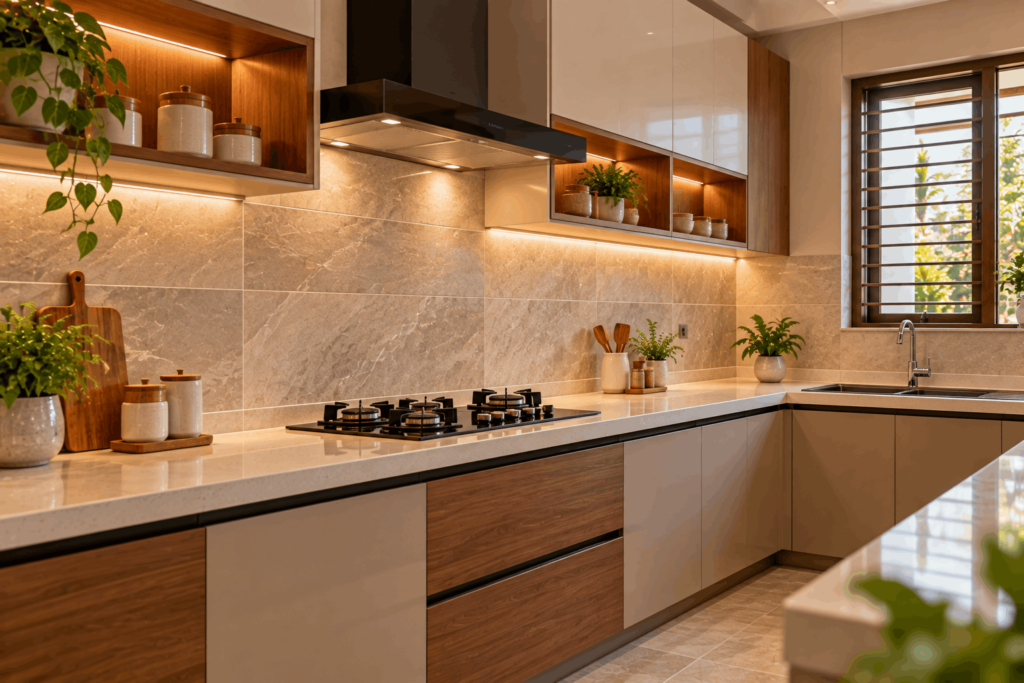
Modern kitchen dado tiles above the countertop in a Madurai home

Dado in Construction: Types, Uses & Benefits | Jayabharath Homes

Dado in Construction: Types, Uses and Benefits for Modern Homes When planning a home, walls need to do more than look good. In spaces such as kitchens, bathrooms, utility areas, entrances, and corridors, they must also withstand water splashes, stains, heat, frequent cleaning, and everyday wear. This is where dado in construction becomes useful. A dado is a protective and decorative treatment applied to a section of an interior wall—commonly the lower portion of the wall or the space above a kitchen countertop. It can be created with ceramic tiles, vitrified tiles, natural stone, glass mosaics, laminates, wall panels, or other washable finishes. Whether you are choosing an apartment in Madurai or designing one of the premium villas in Madurai, understanding dado work can help you select practical finishes that are durable, hygienic, and easy to maintain. At Jayabharath Homes, one of the trusted builders in Madurai, we believe that the right material choices contribute to both long-term performance and beautiful interiors. What Is Dado in Construction? Dado in construction refers to a protective or decorative finish installed on a portion of an internal wall. Traditionally, dado was used on the lower area of walls to protect plaster and paint from impacts, scuffs, moisture, and stains. Today, it is most commonly associated with wall tiles and cladding used in kitchens, bathrooms, wash areas, corridors, and feature walls. In Indian residential projects, the word “dado” is often used in two main ways: Kitchen dado: Wall tiles or cladding installed above the kitchen counter, typically between the countertop and overhead cabinets. Bathroom dado: Wall tiles installed from the floor upward, often covering a partial height or extending close to the ceiling in wet areas. A tiled dado creates a surface that can be cleaned more easily than ordinary painted plaster, particularly where walls are exposed to water, food splashes, soap, oils, and stains. Why Is Dado Work Important in Modern Homes? Dado work combines function and appearance. It protects high-use wall surfaces while allowing homeowners to introduce colour, texture, patterns, and visual character. Protection from Moisture and Water Splashes Bathrooms, wash areas, and kitchens are regularly exposed to water. Wall tiles and water-resistant cladding can help protect the underlying plaster and paint from repeated splashes and moisture exposure. In bathrooms, dado may be extended to a greater height around showers, bathtubs, and washbasins because these zones experience frequent water contact. Easier Cleaning and Maintenance Painted walls can absorb stains and become difficult to clean. Smooth tile or panel surfaces are generally easier to wipe after cooking splashes, soap marks, food stains, or daily dust. This makes dado work particularly useful for: Kitchen backsplashes. Bathroom walls. Utility rooms. Washbasins and handwash zones. Children’s rooms or high-traffic corridors. Entrance walls exposed to frequent touch or scuffing. Dado tiles are widely used because they are durable, water-resistant, and relatively easy to clean and maintain. Improved Interior Appearance Dado work can become a visual highlight rather than just a protective surface. A carefully selected tile pattern, stone finish, textured panel, or contrasting grout colour can define the character of a kitchen or bathroom. For example, a simple neutral kitchen can look more refined with a subway-tile backsplash, while a bathroom can gain depth from a stone-look tile or mosaic accent wall. Better Long-Term Durability Areas exposed to repeated moisture, stains, and cleaning can show wear faster when they rely only on paint. Good-quality dado materials, correct surface preparation, suitable adhesive, proper grouting, and careful installation can help walls remain attractive for longer. Homeowners should choose materials based on the location, water exposure, cleaning needs, budget, and overall interior style—not only on appearance. Types of Dado in Construction Different materials suit different rooms and budgets. The right choice depends on whether the wall is exposed to water, heat, stains, scratches, or heavy cleaning. Ceramic Tile Dado Ceramic tiles are a popular option for bathrooms and kitchens because they are available in many colours, finishes, sizes, and patterns. They are practical for normal residential wet areas when installed with appropriate adhesive and grout. Best for: Kitchen backsplashes. Bathroom walls. Wash areas. Utility rooms. Budget-friendly interior upgrades. Ceramic, glazed, and vitrified tiles are commonly used for wall dado in kitchens and bathrooms. Vitrified Tile Dado Vitrified tiles are known for their dense structure and low water absorption compared with many conventional tile options. They are often selected for a sleek, uniform appearance and good durability. Best for: Modern kitchens. Contemporary bathrooms. High-use utility areas. Homes that need a clean, low-maintenance wall finish. Choose wall-appropriate tile thickness, finish, and size. Very large tiles can look elegant but require skilled installation and a level substrate. Natural Stone Dado Natural stone can give a premium, timeless look. Options may include marble, granite, slate, sandstone, or other stones, depending on the intended aesthetic and local availability. Best for: Feature walls. Premium bathroom accents. Entrance lobbies. Living-room or dining-room wall details. Luxury villas with natural-material interiors. Stone may require sealing and specialised maintenance depending on its porosity and finish. Always check whether the stone is suitable for wet zones before using it in a shower or heavily exposed bathroom wall. Glass Mosaic Dado Glass mosaic tiles are often used as a decorative accent rather than full-wall coverage. Their reflective surface can make compact kitchens and bathrooms appear brighter. Best for: Kitchen backsplash strips. Shower niches. Vanity-wall accents. Borders and feature bands. Mosaic designs can create visual impact, but grout lines may require more cleaning than large-format tiles. Subway Tile Dado Subway tiles are rectangular wall tiles commonly laid in a brick, stacked, herringbone, or vertical pattern. They offer a clean, timeless look and work well in both traditional and contemporary homes. Best for: Kitchen backsplashes. Small bathrooms. Utility counters. Minimalist and Scandinavian-inspired interiors. Wooden or Laminate Panel Dado Wooden panelling, laminates, and similar wall materials can create warmth in bedrooms, dining rooms, hallways, and living areas. However, they are generally not the first choice for continuously wet locations unless the product is specifically

Dado in Construction: Types, Uses & Benefits | Jayabharath Homes Read More »
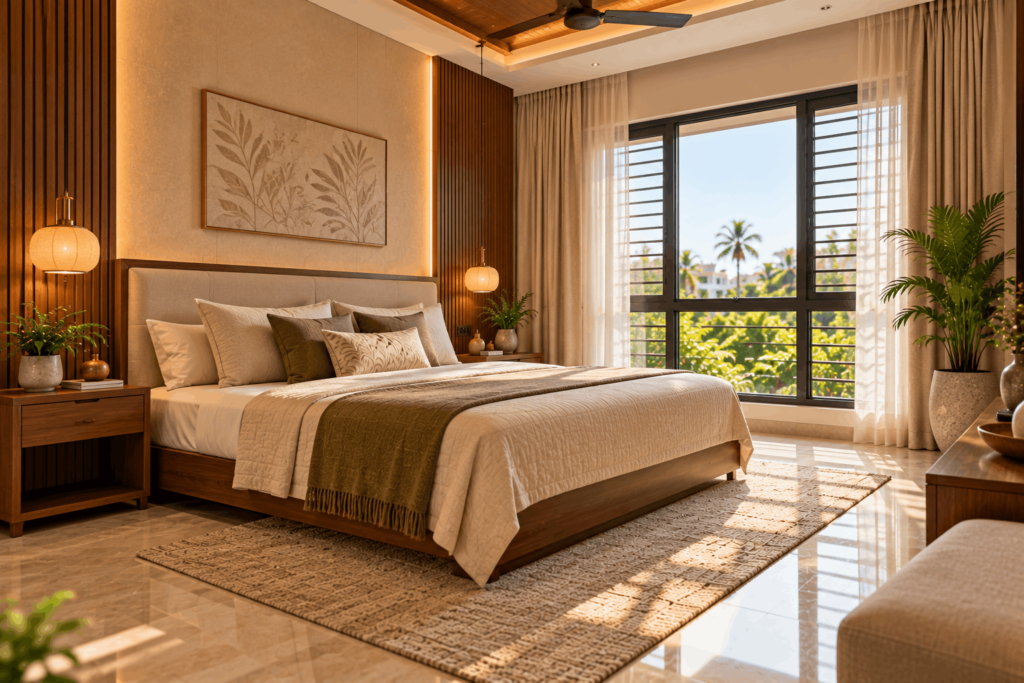
Bed position as per Vastu in a peaceful modern bedroom with a solid headboard wall

Bed Position as per Vastu: 7 Essential Bedroom Vastu Tips for a Peaceful Home

Bed Position as per Vastu: 7 Essential Bedroom Vastu Tips for a Peaceful Home A bedroom should feel calm, comfortable, private, and easy to rest in. For many Indian families, bed position as per Vastu is an important part of bedroom planning because it is believed to influence balance, stability, and peace within the home. Whether you are furnishing an apartment in Madurai or planning the interiors of premium villas in Madurai, bed placement can affect more than just the look of the room. A practical layout can improve circulation, allow easy access to windows and wardrobes, reduce visual clutter, and create a more restful setting. According to commonly followed Vastu guidance, the bed is often placed in the south-west area of the bedroom, with the sleeper’s head directed towards the south or east. Sleeping with the head towards north is generally discouraged in traditional Vastu guidance. At Jayabharath Homes, one of the trusted builders in Madurai, we believe a good home should offer a well-planned layout that homeowners can personalise according to comfort, lifestyle, and tradition. What Does Bed Position as per Vastu Mean? Bed position as per Vastu refers to traditional principles for locating the bed, selecting a sleeping direction, positioning the headboard, and arranging furniture within the bedroom. The aim is to create a bedroom that feels balanced and uncluttered. Beyond Vastu preferences, many of these ideas also support practical interior planning—such as keeping clear walkways, avoiding obstruction of doors and windows, using stable furniture placement, and creating a peaceful sleeping environment. Key aspects typically considered include: The location of the bedroom within the home. The corner or wall chosen for the bed. The direction in which the head points while sleeping. The placement of doors, windows, mirrors, beams, and wardrobes. The amount of open space around the bed. The use of colour, lighting, and clutter control. Why Bedroom Layout Matters for a Peaceful Home A bedroom layout influences how the room feels and functions every day. A bed placed too close to a door, under a beam, directly below a window, or surrounded by bulky furniture may make the room feel crowded or visually unsettled. A thoughtful bedroom arrangement helps you: Keep a clear movement path around the bed. Create better access to wardrobes and storage. Keep windows and ventilation points usable. Improve privacy from the entrance. Make the bedroom feel visually balanced. Reduce unnecessary clutter around the sleeping area. For families choosing an apartment in Madurai or evaluating villas in Madurai, it is useful to assess bedroom dimensions, window placement, wardrobe walls, attached-bathroom doors, and furniture circulation before making a purchase. 7 Essential Bed Position as per Vastu Tips 1. Place the Bed in the South-West Area of the Bedroom Traditional Vastu guidance commonly recommends the south-west portion of the bedroom for the main bed, particularly in a master bedroom. This placement is associated with stability and a grounded feeling in the room. From a practical interior perspective, choose the wall that allows enough space to walk around the bed, open the wardrobe comfortably, and access the attached bathroom without obstruction. Avoid forcing the bed into a corner if it makes the room difficult to use. A well-planned bedroom should balance Vastu preference with daily functionality. 2. Keep Your Head Towards South or East While Sleeping One of the most frequently followed bedroom Vastu recommendations is to sleep with your head towards the south or east. Traditional Vastu sources generally consider south the preferred sleeping direction and east another favourable option. In practical terms, this means choosing the bed’s headboard wall so that your head faces south or east when you lie down. If your existing bedroom layout does not allow an exact placement, prioritise a stable bed position, comfortable circulation, ventilation, and your own quality of sleep rather than making impractical changes. 3. Avoid Sleeping with Your Head Towards North Traditional Vastu guidance generally advises against positioning the head towards north while sleeping. Before moving furniture, check the actual room directions with a reliable compass application or consult a professional if exact directional alignment is important to you. However, do not compromise essential practical needs—such as access to doors, safety, ventilation, or furniture stability—only to achieve a preferred directional layout. 4. Use a Solid Wall Behind the Headboard A solid wall behind the headboard is often recommended in Vastu and is also a practical design choice. It gives the bed a stable focal point and makes the room feel more secure and organised. Avoid placing the headboard directly in front of a window whenever possible. This can reduce window access, make curtain operation difficult, and interfere with natural light or ventilation. Common Vastu guidance suggests placing the headboard against a solid south or west wall where the room layout permits. 5. Avoid Placing the Bed Directly Under a Beam In traditional Vastu, sleeping directly below an exposed beam is often avoided because it is believed to create a sense of pressure. From an interior-design perspective, a low beam above the bed may also feel visually heavy. If the structural layout cannot be changed, consider discussing safe and appropriate design solutions with an interior designer, such as a false ceiling treatment that does not interfere with maintenance access or room height. Never alter structural beams without advice from a qualified structural professional. 6. Keep the Bed Away from Direct Door Alignment Vastu guidance often recommends avoiding a bed that is directly aligned with the bedroom door. The idea is to maintain privacy and avoid a direct visual line from the entrance to the sleeping area. A practical solution may include: Positioning the bed along a side wall. Using a lightweight screen or divider where space allows. Placing a console, accent chair, or plant to soften the direct sightline. Ensuring the door opens without hitting the bed or furniture. Keeping a comfortable walkway between the door and bed. Privacy is particularly important in compact bedrooms within an apartment in Madurai, where furniture planning needs to

Bed Position as per Vastu: 7 Essential Bedroom Vastu Tips for a Peaceful Home Read More »

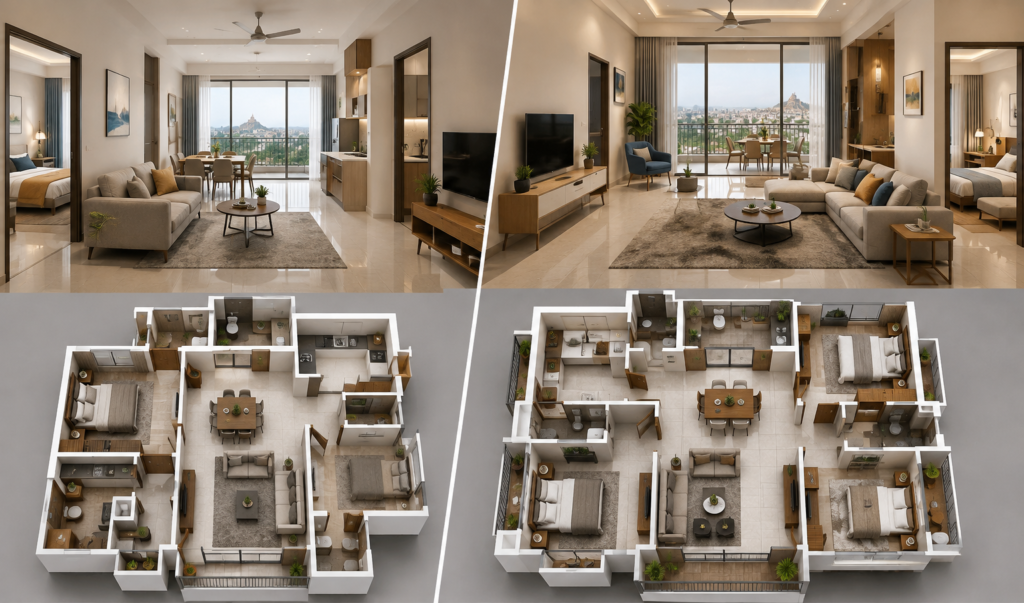
Split-view of modern 2 BHK and 3 BHK apartments comparing living spaces, bedrooms, dining areas, and overall room size in contemporary Indian homes.

2 BHK vs 3 BHK: Which Home Size Actually Fits Your Family?

2 BHK vs 3 BHK: Which Home Size Actually Fits Your Family? 2 BHK vs 3 BHK — if you’re stuck weighing this decision right now, you’re not overthinking it. This is genuinely one of the harder calls in home buying, because it’s not just about budget — it’s about how your life is going to look five, ten years from now, and that’s hard to predict with certainty. Let’s break down what actually separates the two, beyond just “one extra room.” What the space difference actually means day to day On paper, a 3 BHK just sounds like a 2 BHK with one more bedroom. In practice, the difference shows up in ways people don’t always anticipate until they’re actually living in the space. Room for guests, not just family A 2 BHK works well for a couple or a small nuclear family, but it gets tight fast when parents visit for an extended stay, or when you want a dedicated space for a home office. A 3 BHK gives you that buffer room without anyone feeling like they’re intruding on someone else’s space. Kids growing up and needing their own space If you have more than one child, or you’re planning to, a 2 BHK often means kids sharing a room well past the age where they’d rather have their own. A 3 BHK buys you years of not having to think about this — each child gets their own room as they grow, which matters more than people expect once kids hit their teenage years. Storage and everyday clutter This one’s underrated. A third room, even used flexibly as storage, a study, or a small gym corner, solves a problem almost every 2 BHK household eventually runs into — where does everything go once the initial move-in phase settles down. Who a 2 BHK genuinely suits A 2 BHK isn’t a compromise — for a lot of households, it’s the smarter, more efficient choice. Couples without kids, or with one young child, who don’t need the extra space yet First-time buyers who want to get onto the property ladder without stretching their budget to the limit Investors buying primarily for rental income, since 2 BHKs in gated community apartments in Madurai tend to have a larger, more consistent rental pool — young professionals and small families both look for this size, whether you’re browsing flats in Madurai for sale or new apartments in Madurai Anyone who values lower maintenance — less space to clean, furnish, and maintain means genuinely less day-to-day effort Who a 3 BHK genuinely suits Families with two or more children, or planning for more Households where parents or in-laws live with you, even occasionally Anyone who works from home and needs a dedicated, closed-door workspace Buyers thinking long-term — a 3 BHK tends to accommodate a growing family for far longer before you need to move again, which saves you the cost and hassle of upgrading later The cost difference, honestly A 3 BHK will cost more upfront — both in purchase price and in ongoing maintenance charges, since most gated communities calculate maintenance based on built-up area. But it’s worth running the numbers both ways using a home loan EMI calculator: if you’re planning to stay in the home for 8-10+ years, the cost of buying a 2 BHK now and upgrading to a luxury apartment in Madurai later (broker fees, registration charges, moving costs, price appreciation you’d be paying into) often ends up higher than just buying the 3 BHK from the start. Resale and rental value Both sizes hold value well in Madurai’s current market, but they attract different buyers. 2 BHKs move faster in resale and rental markets simply because more people are shopping in that segment. 3 BHKs take slightly longer to sell or rent, but usually to a more stable, longer-term tenant or buyer — families tend to stay put longer than singles or young couples. So, how do you actually decide? Ask yourself honestly: is this a “right now” home, or a “next 10 years” home? If you’re buying for where your life is today, a 2 BHK is often the smarter financial move. If you’re buying for where your family is heading, a 3 BHK saves you a second move down the line. Where we’re currently building Take a look through our ongoing projects in Madurai — as one of the best builders in Madurai, we’ve got both sizes represented across our properties in Madurai depending on what stage of life you’re planning for. Jayabharath Elanza and our best apartments in Madurai project in Surya Nagar offer a strong mix of both 2 BHK and 3 BHK layouts, while Jayabharath Oscar City in Umachikulam and Jayabharath Elite City are both worth comparing if you’re still deciding on locality alongside size. If your family’s grown past apartment living altogether, our gated community villas in Madurai project gives you even more room to work with. Not sure which size actually fits your situation? Come talk to us — we’ll walk you through real floor plans, not just numbers on a brochure.

2 BHK vs 3 BHK: Which Home Size Actually Fits Your Family? Read More »

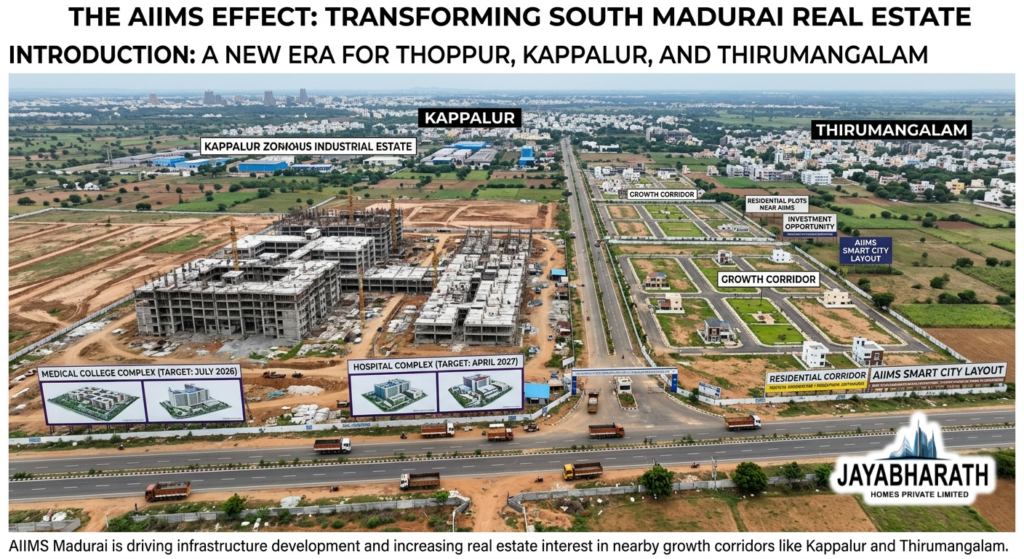
Aerial view of the AIIMS Madurai campus under development with nearby highways, residential layouts, and expanding infrastructure in the Kappalur and Thirumangalam growth corridor.

How AIIMS Madurai Is Changing Property Prices Nearby

How AIIMS Madurai Is Changing Property Prices Nearby If you’ve been keeping half an eye on the Madurai property market over the last couple of years, you’ve probably noticed a pattern — every time AIIMS comes up in conversation, so does the word “appreciation.” It’s not just talk. There’s a real shift happening in and around Kappalur and Thirumangalam, and it’s worth understanding if you’re thinking of buying anytime soon. Why a hospital changes a property market It might seem strange that a medical institution can move real estate prices the way a new IT park or highway does — but AIIMS isn’t just a hospital. It’s a massive, long-term anchor project that pulls a whole ecosystem along with it: doctors, medical staff, students, support businesses, ancillary healthcare services, and families who relocate for treatment or work. That’s thousands of people who suddenly need housing, rentals, shops, and services nearby — sustained demand that doesn’t disappear once construction wraps up. This is a pattern that’s played out in other Indian cities with a new AIIMS campus — the area immediately around it sees the fastest price movement, and the ripple spreads out from there over a few years. What’s actually happening around Madurai <cite index=”9-1″>With AIIMS coming up at Kappalur, along with the proposed Madurai Metro Rail project and airport expansion, the city is seeing a broader push toward urban growth, better connectivity, and rising land values.</cite> Areas closer to Thirumangalam and Kappalur — which sit near the AIIMS site — are among the localities getting the most attention from investors right now, precisely because of this project. It’s not just AIIMS on its own either. <cite index=”10-1″>Madurai’s smart city initiatives are adding to this momentum, with AIIMS itself being described as a project that’s turning the city into a genuine healthcare and education hub.</cite> When you stack a major hospital project on top of metro rail plans and airport upgrades, you get a compounding effect — each project makes the others more valuable too, because together they’re what actually pulls long-term residents (not just visitors) into an area. What this means if you’re buying Land near the AIIMS corridor is likely to keep appreciating. If you’re buying for long-term investment rather than immediate use, plots and layouts in the Thirumangalam-Kappalur stretch are worth serious consideration — early buyers in areas like this typically see the strongest returns, before prices catch up to demand. Rental demand is a real, near-term opportunity. Unlike pure land appreciation, which takes years to play out, rental demand from hospital staff, students, and visiting families tends to show up much sooner — sometimes even before a project is fully operational. A villa or apartment near this corridor isn’t just a long-term bet, it can start earning you rental income relatively early. Don’t chase the hype blindly. Areas near any major infrastructure project tend to attract speculative pricing — sellers marking up land simply because “AIIMS is coming,” without the actual documentation or planning to back it up. This is exactly where checking DTCP and RERA approval matters most — a plot that looks like a great opportunity on paper needs to hold up on paperwork too. Our take We’ve been watching this shift closely, because a good chunk of our own plots and layouts in Madurai sit in areas that stand to benefit from exactly this kind of infrastructure-led growth. If you’re weighing whether now’s the right time to buy near this corridor, we’re happy to walk you through what we’re seeing on the ground — not just the projected numbers, but the actual pace of development and demand. You can also take a look at our broader land promoter projects across Madurai if you want to compare locations before deciding. Big infrastructure projects don’t move property prices overnight — but they do reward the people who understood the pattern early. AIIMS Madurai looks like one of those moments

How AIIMS Madurai Is Changing Property Prices Nearby Read More »

Aerial view of a DTCP-approved residential plotted layout in Madurai with planned roads, landscaped greenery, marked plots, and property documents representing RERA compliance and legal investment security.

DTCP vs RERA Approved Plots: What’s the Difference and Why It Matters

DTCP vs RERA Approved Plots: What’s the Difference and Why It Matters If you’ve started looking at plots in Madurai, you’ve probably seen both terms thrown around a lot — “DTCP approved” and “RERA approved” — sometimes even in the same sentence, like they mean the same thing. They don’t. And honestly, this mix-up trips up more buyers than you’d expect, so let’s clear it up properly. They’re not the same approval — and both matter DTCP approval is about the land itself. DTCP stands for the Directorate of Town and Country Planning — it’s the government body that regulates how land is laid out before anyone builds anything on it. When a plot is DTCP approved, it means the layout has been checked and cleared for things like road width, drainage systems, electricity provisions, open spaces, and whether the land use actually matches what it’s being sold for (residential, in most cases). Without this approval, you might technically own the land, but you could run into serious trouble getting basic infrastructure, or even legal recognition, later on. RERA approval is about the seller and the transaction. RERA, on the other hand, is about accountability and transparency on the developer’s side. It requires the promoter to register the project, disclose the actual land title, timelines, and pricing structure, and — this is the important part — keep buyer funds in an escrow account so the money collected for your specific plot or project doesn’t get diverted elsewhere. RERA is what protects you if the developer delays possession, misrepresents the project, or mishandles your payment. So in short: DTCP tells you the land is legally and physically fit to build on. RERA tells you the person selling it to you is accountable for what they promised. You genuinely need both to be confident about a purchase — one without the other still leaves a gap. Why this actually matters when you’re buying Here’s where it gets practical. A plot can technically be DTCP approved but not RERA registered (this happens with smaller layouts or where the developer skips registration if it falls just under RERA’s threshold). Similarly, a project could talk about RERA registration but not clearly show DTCP-approved layout documents. If either one is missing, ask why — directly. A missing DTCP approval means you could face issues later with construction permissions, resale, or even basic utility connections. A missing RERA registration means you have far less legal recourse if something goes wrong with delivery or documentation. The safest plots are ones where both approvals are in place and the developer is upfront about showing you the actual certificates — not just saying “yes, we’re approved” and moving the conversation along. A quick way to verify before you commit Ask for the DTCP layout approval number and cross-check it with the local planning authority. Ask for the RERA registration number and look it up on the TNRERA website — it’ll show the promoter details, project timeline, and any complaints on record. Don’t rely on brochures or verbal assurance. Ask to see the actual documents, and don’t rush the paperwork stage just because the plot “looks good.” Where we stand Every plot we sell — whether it’s in our Avaniyapuram layouts or Surya Nagar layouts, or through our broader land promoter projects across Madurai — comes with both DTCP and RERA approvals in place, and we’re always glad to walk you through the actual documents before you commit to anything. If a developer hesitates to show you paperwork, that hesitation is telling you something. Ours won’t. Buying land should feel like a confident decision, not a leap of faith. Knowing the difference between these two approvals — and insisting on both — is one of the simplest ways to make sure it is.

DTCP vs RERA Approved Plots: What’s the Difference and Why It Matters Read More »

Aerial view comparing a modern gated villa community and a DTCP-approved residential plotted layout in Madurai, highlighting villas, marked plots, wide roads, landscaped greenery, and planned infrastructure for real estate investment.

Plots vs Villas in Madurai: Which Is the Better Investment in 2026?

Plots vs Villas in Madurai: Which Is the Better Investment in 2026? If you’ve got some savings set aside and you’re trying to decide where to put it, you’ve probably landed on the same fork in the road most Madurai buyers do — do you go for a plot and build later, or do you buy a ready (or under-construction) villa and skip the wait? Both are good options. Both make money for people. And honestly, the “right” answer depends less on the market and more on what you personally want out of the next 5-10 years. Let’s walk through it properly, not with a sales pitch, but with an honest look at both sides. The case for buying a plot There’s something appealing about buying land — it feels like the purest form of real estate investment, and in a lot of ways, it is. Appreciation tends to be stronger. Land itself doesn’t depreciate the way a structure does. A villa’s construction ages, needs maintenance, and its value is tied partly to how well it’s held up. A well-located plot, on the other hand, usually appreciates purely based on location and infrastructure growth around it — roads, schools, hospitals coming up nearby. You control the timeline. Buy now, build in three years when you’re financially ready, or don’t build at all and just resell later. There’s flexibility here that a completed villa doesn’t give you. Lower entry cost. Plots are generally cheaper to buy upfront than a fully built villa of comparable location and size, which makes them more accessible if you’re investing early in your career or want to diversify across more than one property. The catch: you’re on your own for approvals, construction planning, and the actual building process — unless the plot is part of a developed, gated community layout that already comes with roads, drainage, and clear documentation handled for you. That last part matters more than people realize. A cheap plot in a poorly planned layout can turn into a legal or infrastructure headache years down the line. The case for buying a villa A villa is a different kind of investment — you’re not just buying land, you’re buying a finished lifestyle along with it. Immediate usability. You can move in, rent it out, or simply lock the door and walk away, knowing it’s earning rental value or appreciating as a complete asset. No years-long construction process, no dealing with contractors and material costs that keep climbing. Rental income potential. A villa in a good gated community can be rented out almost immediately, giving you a return while the property itself continues to appreciate — something a bare plot can’t offer. Community and amenities add real value. Luxury villas in Madurai that come with landscaped gardens, security, and clubhouse facilities tend to hold and grow their value better than standalone construction, simply because buyers are willing to pay a premium for that lifestyle package. The catch: villas cost more upfront, and a good chunk of that cost is the construction and amenities — which don’t appreciate the same way land does. You’re paying for convenience and lifestyle as much as you’re paying for the asset itself. So, which one actually wins in 2026? Honestly — it depends on your goal. If you’re investing purely for long-term capital appreciation and you’re comfortable waiting, a well-documented plot in a growing area (places like Surya Nagar or Thuvariman have shown strong movement) usually gives you better returns per rupee invested. If you want a property that starts working for you immediately — either as a home or a rental — a villa makes more sense, especially with Madurai’s growing demand for gated community living near areas like Mattuthavani and Surya Nagar. If you’re not sure yet, plots inside an established, approved layout give you the best of both — land appreciation now, with the option to build a villa later when you’re ready. One thing that matters regardless of which you choose: always confirm the DTCP and RERA approval status before committing money. A plot or villa without clean documentation can turn a great investment into a legal mess, no matter how good the location looks on paper. Our take We build both, so we don’t have a dog in this fight — we just want you to make the right call for your situation. If you’re leaning toward land, our plots and layouts in Madurai come fully DTCP and RERA approved. If you’re leaning toward a ready home, our villa projects across Madurai are designed with exactly the kind of community planning that holds its value over time. Not sure which fits you better? Come talk to us — we’d rather spend twenty minutes understanding what you actually need than sell you the wrong thing.

Plots vs Villas in Madurai: Which Is the Better Investment in 2026? Read More »

Promoters in Madurai | Top Builders in Madurai | Best Builders in Madurai | builders in madurai with price | Best Building Constructors in Madurai

Why Promoters in Madurai Play an Important Role in Home Buying

Why Promoters in Madurai Play an Important Role in Home Buying Promoters in Madurai play an important role in shaping the city’s residential development by creating homes and communities that match changing buyer expectations. A real estate promoter is not only involved in developing properties but also in planning residential spaces, understanding market needs, and delivering homes that provide long-term value. As Madurai continues to expand, homebuyers are looking for developers who focus on better planning, quality construction, and comfortable living experiences. The demand for modern Properties in Madurai has increased as families look for homes that offer convenience, functionality, and future value. Unlike earlier generations, today’s buyers evaluate multiple factors before choosing a home, including the developer’s reliability, construction standards, and ability to create residential spaces suitable for evolving lifestyles. This has made the role of property promoters more significant in the overall home-buying journey. Jayabharath Homes has contributed to Madurai’s residential growth by focusing on homes designed around customer requirements and modern expectations. As the real estate market continues to develop, trusted promoters help bridge the gap between buyer needs and quality residential development. How Real Estate Promoters Create Better Living Spaces The responsibility of Promoters in Madurai extends beyond constructing buildings. A good promoter understands how families live, what buyers expect, and how residential communities should be planned for long-term comfort. From identifying suitable development opportunities to creating functional living environments, promoters influence the overall quality of the home-buying experience. Jayabharath Homes focuses on developing residential spaces where planning, usability, and quality work together. With changing customer expectations, buyers are no longer looking only for a house; they want homes that provide comfort, better layouts, and a lifestyle that supports their future goals. This shift has encouraged real estate developers to create communities that focus on overall living experiences. The increasing demand for Builders in Madurai shows that buyers value developers who combine construction knowledge with customer understanding. A reliable promoter ensures that every aspect of development, from planning to execution, contributes to creating homes that families can depend on for years. Why Property Development Requires Experience and Trust When selecting Promoters in Madurai, buyers often look for experience, transparency, and a strong understanding of residential development. Creating a successful property requires more than construction; it involves proper planning, customer awareness, design decisions, and consistent execution. Experienced promoters understand how to create homes that match current requirements while also considering future residential needs. The growth of the housing sector has increased the importance of choosing developers who can maintain quality and trust. Many buyers compare Best Builders in madurai and Top Builders in madurai because they want confidence before investing in a home. A promoter’s reputation is built through consistent development standards and customer satisfaction over time. As a growing residential brand, Jayabharath Homes focuses on creating homes that reflect modern family expectations. For buyers searching for a trusted construction company in madurai, selecting developers with experience and customer-focused values plays an important role in making better property decisions. How Promoters Influence the Future of Residential Development The contribution of Promoters in Madurai has become increasingly important as homebuyers expect more organized and thoughtfully developed residential spaces. A promoter’s role begins much before construction starts, involving market understanding, planning decisions, customer expectations, and creating properties that remain valuable over time. Modern real estate development is not only about creating homes but also about understanding how families want to live and what features can improve their everyday experience. Jayabharath Homes focuses on this evolving approach by developing homes that combine practical designs, quality construction, and customer-focused planning. As lifestyle expectations continue to change, buyers prefer residential spaces that provide comfort, convenience, and better usability. The role of experienced promoters is to identify these needs and create developments that match current and future requirements. The demand for Properties in Madurai continues to increase because families are looking for reliable housing options from developers they can trust. A well-planned residential development reflects the promoter’s vision, attention to detail, and commitment toward creating better living environments. Why Construction Quality Matters in Property Development Quality construction is one of the strongest factors that define reliable Promoters in Madurai. Buyers today understand that a home is a long-term investment, which makes construction standards, material quality, planning, and execution extremely important. A trusted promoter focuses on creating residential spaces that provide durability, comfort, and value instead of simply completing a building project. With rising expectations, the role of a professional madurai construction company has expanded beyond traditional construction methods. Buyers now look for developers who can deliver homes that balance modern design with long-term reliability. This is why the demand for experienced residential developers continues to grow among families planning to invest in quality homes. As one of the recognized names among residential developers, Jayabharath Homes focuses on delivering homes built around customer expectations and lifestyle needs. Buyers looking for the best construction company in madurai often prioritize trust, experience, and a commitment to quality before making their final decision. Creating Communities Beyond Individual Homes The role of Promoters in Madurai has evolved from developing individual homes to creating complete residential experiences. Today’s buyers are not only interested in the structure of a house; they also consider the surroundings, community environment, accessibility, and overall lifestyle offered by the development. This change has encouraged promoters to focus more on creating spaces where families can experience better living standards. Jayabharath Homes understands that a home is connected to many aspects of everyday life. Thoughtful planning, comfortable spaces, and customer-focused development help create residential environments that support modern lifestyles. As buyers become more selective, promoters need to focus on long-term satisfaction rather than only property development. The increasing interest in the best gated community in madurai reflects how buyer expectations are changing toward organized and comfortable residential environments. Reliable promoters help shape these communities by focusing on quality development, better planning, and homes that support the needs of modern families. How Homebuyers Evaluate Promoters Before Choosing

Why Promoters in Madurai Play an Important Role in Home Buying Read More »

land for sale in madurai, plots for sale in madurai, plots in madurai, land in madurai, residential plots in madurai, dtcp approved plots in madurai.

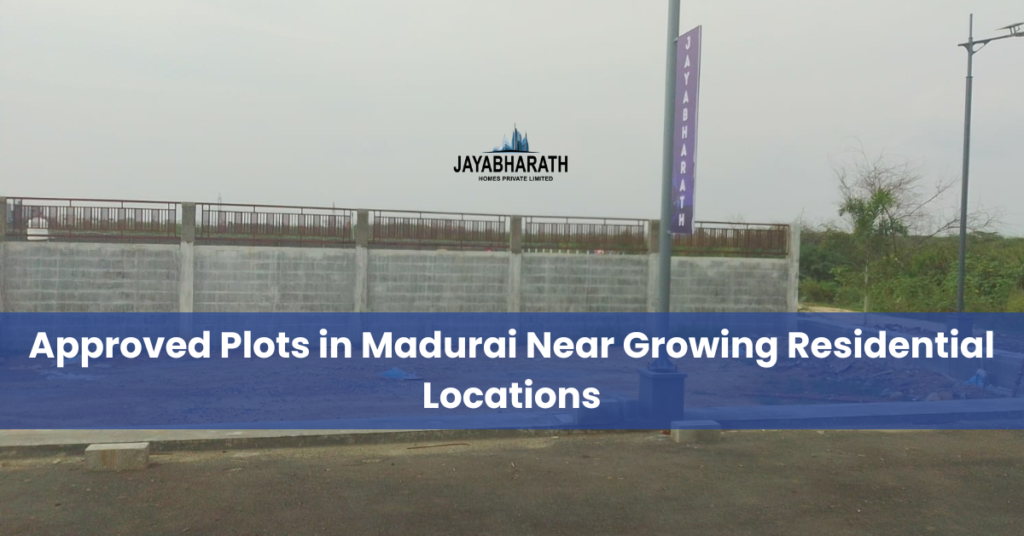
Approved Plots in Madurai Near Growing Residential Locations

Approved Plots in Madurai Near Growing Residential Locations Approved plots in madurai are becoming one of the most preferred real estate choices among buyers looking for safe and long-term land investment. In recent years, buyers have become more aware of the importance of legal approvals, clear ownership, and proper documentation before purchasing land. This shift has significantly increased demand for dtcp approved plots in madurai and legally verified residential developments across the city. Instead of choosing unapproved layouts or isolated land parcels, buyers are now prioritizing structured plotted developments that offer better transparency and future usability. The demand for land for sale in madurai and plots for sale in madurai has also expanded beyond the city center into developing residential corridors. Buyers searching for land in madurai are increasingly focusing on areas with infrastructure growth and planned expansion. Locations with strong connectivity and residential activity are attracting attention from both end users and investors who are interested in buying land in madurai for future construction or appreciation. As awareness grows, approved plots in madurai are no longer viewed only as a purchase but as a long-term asset supported by legal clarity and planned development. Why Buyers Prefer DTCP Approved Plots in Madurai One of the main reasons buyers prefer approved plots in madurai is the security associated with legal approvals. Purchasing dtcp approved plots for sale in madurai gives buyers confidence that the land meets planning regulations and can be used for future residential development without complications. This has become especially important for people looking at madurai residential plots for sale as part of long-term investment planning. Buyers evaluating plot for sale options are also comparing documentation quality, accessibility, and future development potential before making decisions. As a result, the market for madurai land sale has shifted toward organized and legally verified developments rather than unplanned layouts. This has increased interest in gated community plots in madurai, where buyers can ensure proper infrastructure and layout planning in addition to legal clarity. The rise in awareness around land value in madurai and future appreciation has made legal approvals one of the strongest deciding factors in land investment decisions across the city. Key Locations for Approved Plots in Madurai The demand for approved plots in madurai is increasingly concentrated in developing residential corridors such as Avaniyapuram and Surya Nagar, where buyers are actively looking for legally verified land with long-term appreciation potential. Buyers searching for land for sale in avaniyapuram madurai are often influenced by the location’s airport connectivity and expanding infrastructure. This has also increased demand for plots near madurai airport and gated community plots in madurai among investors looking for future-ready residential developments. In Avaniyapuram, developments like Jayabharath Green Nest Plots are aligned with the growing demand for dtcp approved plots in madurai and residential layouts with clear title. Similarly, buyers exploring land for sale in surya nagar madurai and plots in madurai are increasingly focusing on structured plotted developments rather than isolated land parcels. The demand for premium residential plots madurai and villa plots in madurai has also increased in these expanding residential zones. For buyers looking at planned and legally verified land opportunities, Jayabharath Majestica in Surya Nagar reflects the shift toward organized plotted development madurai with better infrastructure planning and long-term investment potential. Why Structured Plot Developments Are Gaining Importance The market for approved plots in madurai is increasingly moving toward structured and legally verified plotted developments rather than isolated land parcels. Buyers today are more cautious while evaluating land investment in madurai and prefer layouts that offer planning, accessibility, and documentation clarity. This shift has increased demand for dtcp approved plots in madurai and gated community plots in madurai, where buyers can ensure both legal security and long-term usability. Unlike unplanned layouts, organized developments provide better infrastructure and a clearer path for future construction. Buyers searching for plot for sale options are now comparing layout planning, location access, and development quality before making decisions. This has also increased interest in premium residential plots madurai and villa community plots madurai among those looking for long-term appreciation. As a result, approved plots in madurai are increasingly associated with structured plotted developments that support both residential construction and future investment growth. Approved Plots in Avaniyapuram Near Madurai Airport Avaniyapuram has become one of the most active residential corridors for buyers searching for approved plots in madurai, especially due to its airport connectivity and infrastructure growth. The demand for plots for sale in avaniyapuram and plots near avaniyapuram airport road has increased among buyers looking for accessibility-driven investment opportunities. This has also strengthened interest in land for sale near madurai airport and investment-oriented residential developments. Buyers exploring dtcp approved plots for sale in madurai are increasingly focusing on projects that combine legal clarity with location advantage. In this context, approved plots near madurai airport align with the growing preference for planned residential layouts in Avaniyapuram. The area is also attracting attention from buyers searching for buy land in madurai with long-term appreciation potential. With continuous development around the airport corridor, Avaniyapuram is becoming one of the strongest locations for madurai land sale and future residential expansion. Surya Nagar Emerging as a Premium Plot Destination Alongside Avaniyapuram, Surya Nagar is gaining strong attention among buyers looking for approved plots in madurai with a more premium and structured development environment. The increasing demand for land for sale in surya nagar madurai and plots in madurai reflects how buyers are moving toward planned residential corridors with long-term value. Surya Nagar is also attracting those looking for premium plots in madurai and villa plots in madurai within organized layouts. Buyers evaluating madurai plot price and land value in madurai are increasingly recognizing the importance of infrastructure and future development potential in locations like Surya Nagar. This has increased interest in residential plots in madurai that are part of legally verified and planned developments rather than scattered land parcels. For buyers looking for structured plotted developments, approved plots in Surya Nagar Madurai represent the

Approved Plots in Madurai Near Growing Residential Locations Read More »