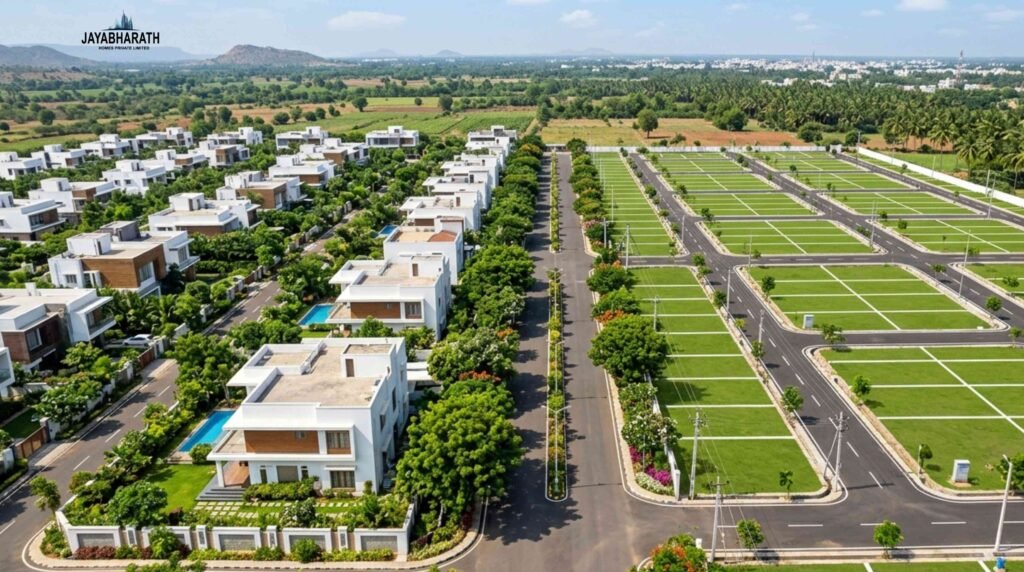
Gated Community Villas in Madurai

Home buyers discussing a residential project with a property developer in Madurai

Madurai Promoters: How to Choose the Best Developer | Jayabharath Homes

Madurai Promoters: A Complete Guide to Choosing the Best Property Developer in Madurai Choosing among Madurai promoters is one of the most important decisions a home buyer makes. A home is a long-term investment, so the right property developer should offer more than an attractive brochure or a competitive price. You should look for transparent documentation, a practical location, construction quality, clear specifications, realistic timelines, responsive customer support, and a project that suits your family’s lifestyle. Whether you are looking for an apartment in Madurai, a plotted development, or premium villas in Madurai, this guide will help you compare developers with confidence. The Tamil Nadu Real Estate Regulatory Authority (TNRERA) regulates and promotes the state’s real-estate sector, and its portal provides project and promoter information that buyers can use during due diligence. TNRERA states that real-estate projects and agents must be registered, and that promoters must upload project information, approvals, and other required details on the portal. At Jayabharath Homes, one of the trusted builders in Madurai, we believe informed buyers make better property decisions. Use this guide as a practical checklist before booking your dream home. Important disclaimer: This article is for general education only. It is not legal, tax, financial, engineering, or investment advice. Before booking a property, verify documents independently with a qualified advocate, chartered accountant, architect, engineer, bank, or other relevant professional. What Are Madurai Promoters? The term Madurai promoters generally refers to property developers, builders, land developers, and real-estate companies that plan, develop, market, and deliver residential or commercial projects in and around Madurai. Depending on the type of project, a promoter may handle: Land identification and acquisition. Layout planning and design. Statutory approvals and registrations. Construction planning and contractor coordination. Sales, customer documentation, and payment schedules. Handover, possession, and post-handover support. Common-area development and maintenance arrangements. Under RERA terminology, a “promoter” is broadly the person or entity that constructs or causes construction of an independent building or project for sale, or develops land into plots for sale. The specific legal definition and obligations should be checked against the applicable law and project facts. Why Choosing the Right Property Developer Matters The developer you choose can affect every stage of your home-buying journey—from the reliability of the documents and quality of construction to possession communication and support after handover. Legal Clarity and Document Transparency A reliable developer should be able to provide project details, approvals, title-related documents, sanctioned plans, specifications, and agreement terms in a clear manner. Before paying a booking amount, verify the project on the official TNRERA portal where applicable. TNRERA provides searchable records for registered building and layout projects, including promoter names, project details, approvals, and completion information. Construction Quality and Specifications Construction quality affects safety, comfort, maintenance costs, resale value, and day-to-day living. Do not rely only on model-unit finishes or marketing images. Ask for written specifications covering: Structural system and materials. Wall and flooring finishes. Electrical wiring, switches, and fixtures. Plumbing lines and sanitary fittings. Doors, windows, and glass specifications. Waterproofing treatment. Lift, generator, water supply, and drainage provisions. Common-area finishes. Parking details. Brand names or equivalent-quality clauses. Delivery Track Record and Timeline Communication A developer’s past completed projects can reveal a lot about workmanship, design consistency, amenities, and customer support. Visit completed communities if possible and speak with existing residents about their actual experience. Also review the project’s declared completion date and progress disclosures. Official RERA guidance and project portals are intended to help buyers review project information and track relevant updates. After-Sales Service A property purchase does not end at registration or possession. Ask how the developer handles snag rectification, handover documentation, maintenance transition, common-area defects, and customer-service requests. A clear process for after-sales support is often a strong sign of an organised developer. 10 Factors to Compare Madurai Promoters 1. Check TNRERA Registration and Project Details For projects covered by RERA, verify the registration number, developer name, project address, validity, approvals, declared completion date, and documents through the official TNRERA portal. TNRERA says promoters are required to upload proposed-project details, registration information, booked units or plots, and approval details. Check that the details match: The brochure and marketing material. Project name and location. Promoter’s legal entity name. Survey number or land details where shown. Unit type and carpet-area details. Expected completion or possession date. Amenities and project phase. TNRERA also publishes lists of building and layout projects with details including promoter name, project address, approvals, and project completion information. 2. Verify Land Title and Approvals Independently A project may look impressive, but legal due diligence is essential. Engage a qualified property advocate to verify the title chain, encumbrance certificate, land use, approvals, access rights, and relevant legal records. Ask for and professionally verify, as applicable: Parent documents and title documents. Encumbrance certificate. Approved building or layout plan. Planning authority approvals. Commencement permission where applicable. RERA registration and disclosures. Property tax and utility records where relevant. Power of attorney or development agreement, if applicable. Litigation or encumbrance disclosures. Completion and occupancy documentation at the appropriate stage. Do not rely solely on photocopies, verbal assurances, online listings, or a developer’s sales presentation. 3. Study the Developer’s Completed Projects Visit at least one or two completed projects developed by the promoter. A site visit lets you evaluate real workmanship rather than only sample-flat styling. Observe: Condition of external paint and facade. Quality of driveways, drainage, landscaping, and common areas. Water management and cleanliness. Lift operation and backup systems. Parking circulation. Wall cracks, seepage, tile quality, and finishing. Security arrangements. Resident feedback on maintenance and service. Overall liveability after occupancy. This is one of the best ways to compare top builders in Madurai with lesser-known or newer developers. 4. Read the Agreement Before Paying Major Amounts The agreement for sale is a crucial legal document. Review it with an independent advocate before signing or making a substantial payment. Confirm that it clearly states: Buyer and promoter names. Project and unit identification. Carpet area and measurement basis. Total consideration and payment

Madurai Promoters: How to Choose the Best Developer | Jayabharath Homes Read More »
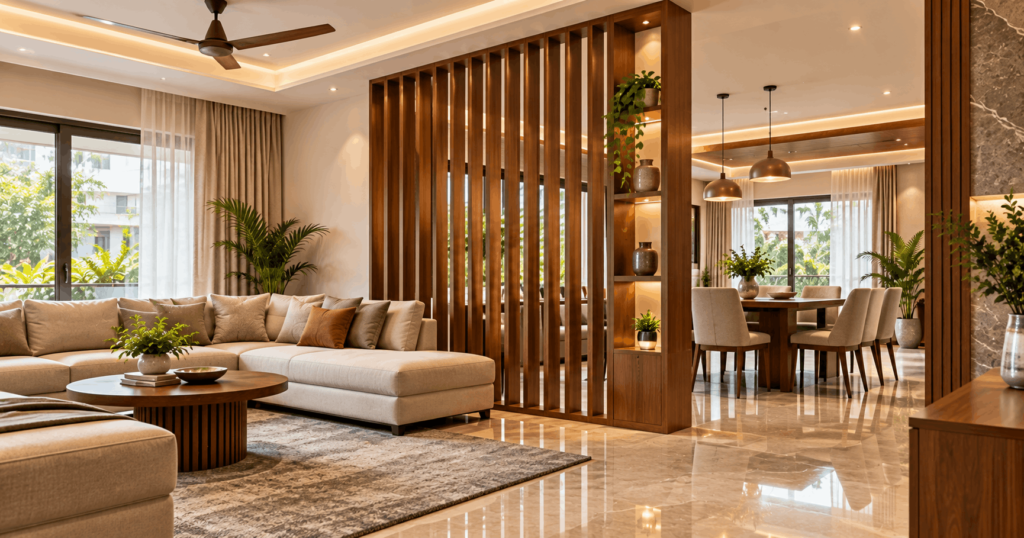
Modern wooden slat hall partition separating living and dining areas in a Madurai home

Modern Hall Partition Designs: Stylish Ideas | Jayabharath Homes

Modern Hall Partition Designs: Stylish Ideas for Beautiful Homes Open-plan homes feel spacious, bright, and flexible—but they can also make it difficult to create clear zones for living, dining, work, prayer, storage, or entertainment. Modern hall partition designs solve this problem by defining spaces without making the home feel closed or cramped. A thoughtfully designed partition can improve privacy, introduce texture, add storage, frame a TV unit, filter light, or create a welcoming entry zone. Whether you are furnishing a compact apartment in Madurai or planning interiors for premium villas in Madurai, the right hall partition should balance beauty, circulation, ventilation, daylight, and everyday usability. At Jayabharath Homes, one of the trusted builders in Madurai, we believe that a well-designed home should give families the flexibility to personalise their interiors. This guide explains popular hall partition ideas, materials, planning tips, and mistakes to avoid before you finalise your living-room design. What Is a Hall Partition? A hall partition is a divider that separates one section of a living space from another without building a full permanent wall. It can be fixed, movable, floor-to-ceiling, half-height, transparent, open, or designed with storage. Modern hall partitions are commonly used to separate: Living and dining areas. Entrance foyer and living room. Hall and kitchen. TV zone and seating area. Pooja area and living room. Home office and common area. Reading nook and main hall. Bedroom corner and work area in compact homes. Unlike a solid masonry wall, a well-designed partition can retain a sense of openness while creating practical visual boundaries. Wooden slats, glass panels, metal frames, jali screens, open shelves, and TV-unit partitions are popular choices for contemporary Indian homes. Why Use a Hall Partition in Your Home? A hall partition is more than a decorative interior feature. It can improve how a home looks and functions. Creates Clear Zones in an Open Layout A partition can separate the living room from the dining zone, foyer, kitchen, or study area. This gives each part of the home a clearer purpose without reducing the sense of openness. For example, a vertical slat divider between the sofa and dining table can create a visual boundary while still allowing air and light to travel through the space. Adds Privacy Without Closing the Room A partition can hide the direct view of a dining table, kitchen counter, pooja corner, or work desk from the entrance. It is especially useful when the main door opens directly into the living room. Open slats, jali screens, fluted panels, or frosted glass can offer partial privacy while keeping the hall bright. Improves Storage and Functionality Some modern hall partition designs can include open shelves, cabinets, display niches, a TV panel, a bookcase, a shoe-storage unit, or a compact work desk. A double-sided partition is particularly useful: one side can support a TV unit for the living room, while the other can have storage or display shelves for the dining or foyer area. Enhances Interior Style A partition can become the focal point of a room. It can introduce natural wood tones, sculptural fluting, metal detailing, stone textures, soft lighting, or traditional Indian patterns. Rather than using many decorative items, one carefully designed partition can give the living room a finished, premium look. Keeps Light and Ventilation Flowing Unlike a closed wall, open partitions allow light and airflow to move across spaces. Slatted wood, metal grids, glass panels, and jali patterns are useful when the goal is to divide space without blocking ventilation. 8 Modern Hall Partition Designs for Beautiful Homes 1. Wooden Slat Hall Partition A wooden slat partition uses evenly spaced vertical or horizontal battens to create a clean, contemporary divider. It is one of the most versatile designs because it allows light and air to pass through while still defining the room. Vertical slats can make a low ceiling appear taller, while horizontal slats can visually widen a narrow room. Best for: Living and dining separation. Foyer screening. Compact apartments. Modern and minimalist interiors. Homes that need airflow and visual openness. Wooden slats with even spacing are widely used in modern Indian interiors because they create rhythm, texture, and a clear boundary without fully closing a space. 2. Glass and Metal Frame Partition A glass partition with slim black, bronze, gold, or powder-coated metal frames gives a sophisticated, contemporary appearance. Clear glass keeps the room visually open, while fluted or frosted glass provides more privacy. This style works particularly well in homes with neutral colours, modern furniture, marble-look flooring, or industrial-inspired interiors. Best for: Living room and study separation. Hall and dining zone. Compact spaces that need maximum light. Luxury villa interiors. Contemporary apartments. For homes in warm climates, avoid using a glass partition in a location that blocks cross ventilation or creates unwanted glare. Choose a layout that maintains comfortable air movement. 3. Fluted Panel Partition Fluted panels have repeated vertical grooves that create depth and shadow. They are currently popular in modern interiors because they add texture without relying on bright colours or heavy ornamentation. A fluted-panel partition can be made from veneer-finished MDF, plywood, wood, WPC, painted panels, or other suitable materials. It can be floor-to-ceiling, half-height, backlit, or combined with open shelving. Best for: Elegant living-room partitions. TV backdrops with side dividers. Foyer-to-hall separation. Modern luxury interiors. Homes with warm-neutral colour palettes. Use fluted designs thoughtfully. In a small room, cover only part of the partition or use a lighter finish to avoid making the space feel visually heavy. 4. Jali Partition Design A jali partition uses decorative cut-out patterns to create privacy while allowing filtered light and airflow. It can be made from CNC-cut MDF, WPC, wood, laser-cut metal, brass, or other materials. Jali designs can be geometric, floral, abstract, traditional, or contemporary. They work beautifully near entry foyers, pooja spaces, dining areas, and living rooms. Best for: Pooja room partitions. Entrance foyer screens. Traditional-modern interiors. Living-dining dividers. Homes that need partial visibility and airflow. For a Madurai home, select a material based

Modern Hall Partition Designs: Stylish Ideas | Jayabharath Homes Read More »
Modern kitchen dado tiles above the countertop in a Madurai home

Dado in Construction: Types, Uses & Benefits | Jayabharath Homes

Dado in Construction: Types, Uses and Benefits for Modern Homes When planning a home, walls need to do more than look good. In spaces such as kitchens, bathrooms, utility areas, entrances, and corridors, they must also withstand water splashes, stains, heat, frequent cleaning, and everyday wear. This is where dado in construction becomes useful. A dado is a protective and decorative treatment applied to a section of an interior wall—commonly the lower portion of the wall or the space above a kitchen countertop. It can be created with ceramic tiles, vitrified tiles, natural stone, glass mosaics, laminates, wall panels, or other washable finishes. Whether you are choosing an apartment in Madurai or designing one of the premium villas in Madurai, understanding dado work can help you select practical finishes that are durable, hygienic, and easy to maintain. At Jayabharath Homes, one of the trusted builders in Madurai, we believe that the right material choices contribute to both long-term performance and beautiful interiors. What Is Dado in Construction? Dado in construction refers to a protective or decorative finish installed on a portion of an internal wall. Traditionally, dado was used on the lower area of walls to protect plaster and paint from impacts, scuffs, moisture, and stains. Today, it is most commonly associated with wall tiles and cladding used in kitchens, bathrooms, wash areas, corridors, and feature walls. In Indian residential projects, the word “dado” is often used in two main ways: Kitchen dado: Wall tiles or cladding installed above the kitchen counter, typically between the countertop and overhead cabinets. Bathroom dado: Wall tiles installed from the floor upward, often covering a partial height or extending close to the ceiling in wet areas. A tiled dado creates a surface that can be cleaned more easily than ordinary painted plaster, particularly where walls are exposed to water, food splashes, soap, oils, and stains. Why Is Dado Work Important in Modern Homes? Dado work combines function and appearance. It protects high-use wall surfaces while allowing homeowners to introduce colour, texture, patterns, and visual character. Protection from Moisture and Water Splashes Bathrooms, wash areas, and kitchens are regularly exposed to water. Wall tiles and water-resistant cladding can help protect the underlying plaster and paint from repeated splashes and moisture exposure. In bathrooms, dado may be extended to a greater height around showers, bathtubs, and washbasins because these zones experience frequent water contact. Easier Cleaning and Maintenance Painted walls can absorb stains and become difficult to clean. Smooth tile or panel surfaces are generally easier to wipe after cooking splashes, soap marks, food stains, or daily dust. This makes dado work particularly useful for: Kitchen backsplashes. Bathroom walls. Utility rooms. Washbasins and handwash zones. Children’s rooms or high-traffic corridors. Entrance walls exposed to frequent touch or scuffing. Dado tiles are widely used because they are durable, water-resistant, and relatively easy to clean and maintain. Improved Interior Appearance Dado work can become a visual highlight rather than just a protective surface. A carefully selected tile pattern, stone finish, textured panel, or contrasting grout colour can define the character of a kitchen or bathroom. For example, a simple neutral kitchen can look more refined with a subway-tile backsplash, while a bathroom can gain depth from a stone-look tile or mosaic accent wall. Better Long-Term Durability Areas exposed to repeated moisture, stains, and cleaning can show wear faster when they rely only on paint. Good-quality dado materials, correct surface preparation, suitable adhesive, proper grouting, and careful installation can help walls remain attractive for longer. Homeowners should choose materials based on the location, water exposure, cleaning needs, budget, and overall interior style—not only on appearance. Types of Dado in Construction Different materials suit different rooms and budgets. The right choice depends on whether the wall is exposed to water, heat, stains, scratches, or heavy cleaning. Ceramic Tile Dado Ceramic tiles are a popular option for bathrooms and kitchens because they are available in many colours, finishes, sizes, and patterns. They are practical for normal residential wet areas when installed with appropriate adhesive and grout. Best for: Kitchen backsplashes. Bathroom walls. Wash areas. Utility rooms. Budget-friendly interior upgrades. Ceramic, glazed, and vitrified tiles are commonly used for wall dado in kitchens and bathrooms. Vitrified Tile Dado Vitrified tiles are known for their dense structure and low water absorption compared with many conventional tile options. They are often selected for a sleek, uniform appearance and good durability. Best for: Modern kitchens. Contemporary bathrooms. High-use utility areas. Homes that need a clean, low-maintenance wall finish. Choose wall-appropriate tile thickness, finish, and size. Very large tiles can look elegant but require skilled installation and a level substrate. Natural Stone Dado Natural stone can give a premium, timeless look. Options may include marble, granite, slate, sandstone, or other stones, depending on the intended aesthetic and local availability. Best for: Feature walls. Premium bathroom accents. Entrance lobbies. Living-room or dining-room wall details. Luxury villas with natural-material interiors. Stone may require sealing and specialised maintenance depending on its porosity and finish. Always check whether the stone is suitable for wet zones before using it in a shower or heavily exposed bathroom wall. Glass Mosaic Dado Glass mosaic tiles are often used as a decorative accent rather than full-wall coverage. Their reflective surface can make compact kitchens and bathrooms appear brighter. Best for: Kitchen backsplash strips. Shower niches. Vanity-wall accents. Borders and feature bands. Mosaic designs can create visual impact, but grout lines may require more cleaning than large-format tiles. Subway Tile Dado Subway tiles are rectangular wall tiles commonly laid in a brick, stacked, herringbone, or vertical pattern. They offer a clean, timeless look and work well in both traditional and contemporary homes. Best for: Kitchen backsplashes. Small bathrooms. Utility counters. Minimalist and Scandinavian-inspired interiors. Wooden or Laminate Panel Dado Wooden panelling, laminates, and similar wall materials can create warmth in bedrooms, dining rooms, hallways, and living areas. However, they are generally not the first choice for continuously wet locations unless the product is specifically

Dado in Construction: Types, Uses & Benefits | Jayabharath Homes Read More »

Home ventilation design with large windows and natural airflow in a modern Madurai home

Home Ventilation Design: 7 Essential Factors for a Comfortable Home in Madurai

Home Ventilation Design: 7 Essential Factors for a Comfortable Home in Madurai A well-planned home ventilation design can make a major difference to everyday comfort in Madurai. Fresh air, reduced indoor heat, better airflow, lower moisture, and less dependence on artificial cooling all begin with the way a home is planned before construction starts. Whether you are considering an apartment in Madurai or exploring premium villas in Madurai, ventilation should be treated as an essential design feature—not an afterthought. At Jayabharath Homes, one of the trusted builders in Madurai, we believe that homes should be designed for natural light, practical airflow, and long-term comfort. India’s National Building Code includes guidance on lighting and natural ventilation, while Indian standards for residential ventilation emphasise fresh-air supply, odour control, removal of combustion products, and satisfactory thermal conditions. Note: Ventilation requirements depend on plot orientation, local wind conditions, room dimensions, building approvals, and applicable codes. Consult a qualified architect or engineer for your individual project. What Is Home Ventilation Design? Home ventilation design is the planning of windows, doors, vents, courtyards, room layouts, and mechanical systems so that fresh air can enter, circulate, and leave a home effectively. Good ventilation can help: Bring fresh outdoor air into occupied rooms. Remove stale air, humidity, cooking odours, and indoor pollutants. Support thermal comfort during warm weather. Improve daylight and the overall sense of openness. Reduce unnecessary dependence on air conditioning and exhaust systems. For residential spaces, Indian guidance highlights the importance of locating inlet openings on the windward side and outlet openings on the leeward side to help create airflow. Why Ventilation Matters in Madurai Homes Madurai experiences high temperatures for much of the year, with seasonal humidity and rain. A home that has large west-facing glass areas without shading, poorly positioned windows, blocked air paths, or inadequate kitchen and bathroom exhaust can become uncomfortable quickly. A climate-responsive home ventilation design should balance airflow with solar control. In warmer Indian climates, designers commonly use cross ventilation, orientation, exterior shading, courtyards, thermal mass, and controlled openings to reduce heat gain and encourage air movement. For families purchasing from the top builders in Madurai, ventilation planning should be part of the project comparison—not merely an interior-design decision after handover. 7 Essential Factors for Home Ventilation Design 1. Plan for Cross Ventilation Cross ventilation is one of the most effective natural-ventilation strategies. It occurs when fresh air enters through an opening on one side of a room and exits through an opening on the opposite or adjacent side. For better airflow, consider: Windows or openings on two different sides of a room. Unobstructed paths between inlet and outlet openings. Operable windows rather than fixed glazing alone. Doors, partitions, and furniture layouts that do not block the airflow route. Windows positioned to respond to local wind direction. Cross ventilation is especially valuable in bedrooms, living rooms, and dining spaces. Sources on Indian home design recommend placing openings on opposite or adjacent walls and avoiding bulky fixed elements that obstruct airflow. 2. Choose the Right Building Orientation The orientation of a home affects both ventilation and heat gain. Before finalising a floor plan, architects assess the plot, surrounding buildings, road position, local wind direction, sunlight, and privacy requirements. In hot climates, north- and east-facing openings generally receive gentler daylight than unshaded west-facing openings. Large west-facing glazing can add significant afternoon heat, so it requires careful shading and glass specification. A practical approach may include: Placing primary living areas where they can receive daylight and airflow. Minimising or shading large west-facing windows. Using service spaces, stairs, utility rooms, or storage areas as heat buffers where appropriate. Aligning openings with prevailing breezes where site conditions allow. Reviewing the plan with the architect before construction begins. For a well-designed villa in Madurai, orientation can influence both comfort and long-term electricity use. 3. Use Window Size, Position and Type Carefully Window design is not only about appearance. The size, sill height, top height, opening style, direction, and operability determine how effectively a room can ventilate. A strong ventilation strategy often includes: Larger operable openings in regularly used rooms. Lower-level inlet openings to admit cooler moving air. Higher-level openings, clerestory windows, or vents that help warmer air rise and escape. Windows that can be adjusted during rain, dust, heat, and changing wind conditions. Mosquito screens and safety grills planned without blocking operable window areas. Indian residential ventilation guidance notes that inlet openings should be distributed effectively and placed on the windward side, while outlet openings should be on the leeward side. 4. Control Direct Heat with Shading Ventilation works best when the home is not constantly gaining excess heat from direct sunlight. Shading reduces solar heat before it enters the room, helping interiors remain more comfortable. Useful shading features include: Deep chajjas or roof overhangs. Recessed windows. Vertical fins on east- and west-facing facades. Pergolas over sit-outs and balconies. External blinds, screens, or louvers. Trees and landscape planning that shade outdoor areas. Jali screens that can offer shade, privacy, and filtered airflow. External shading devices such as awnings, pergolas, and screens can block direct sun while allowing useful airflow. For modern villas in Madurai, a shaded balcony or veranda can also act as a transition zone between hot outdoor areas and the cooled indoor spaces. 5. Design Kitchens and Bathrooms for Exhaust Kitchens and bathrooms need special ventilation because they produce steam, heat, cooking fumes, moisture, and odours. Natural ventilation may be useful, but it should often be supported by appropriate mechanical exhaust. For kitchens, consider: A window near the cooking zone where practical. A chimney or exhaust hood that vents outdoors. A separate exhaust fan if required. Cross ventilation that moves fumes away from living areas. Adequate make-up air so exhaust systems work efficiently. For bathrooms, consider: An operable window, ventilator, or duct where possible. An exhaust fan with proper external discharge. Moisture-resistant finishes. Sufficient airflow to prevent persistent dampness and mould growth. A kitchen vent near the stove, combined with an opening across

Home Ventilation Design: 7 Essential Factors for a Comfortable Home in Madurai Read More »

Modern TV cabinet design for living room with floating console and fluted wall panel

TV Cabinet Designs for Living Room: 7 Modern Ideas 2026

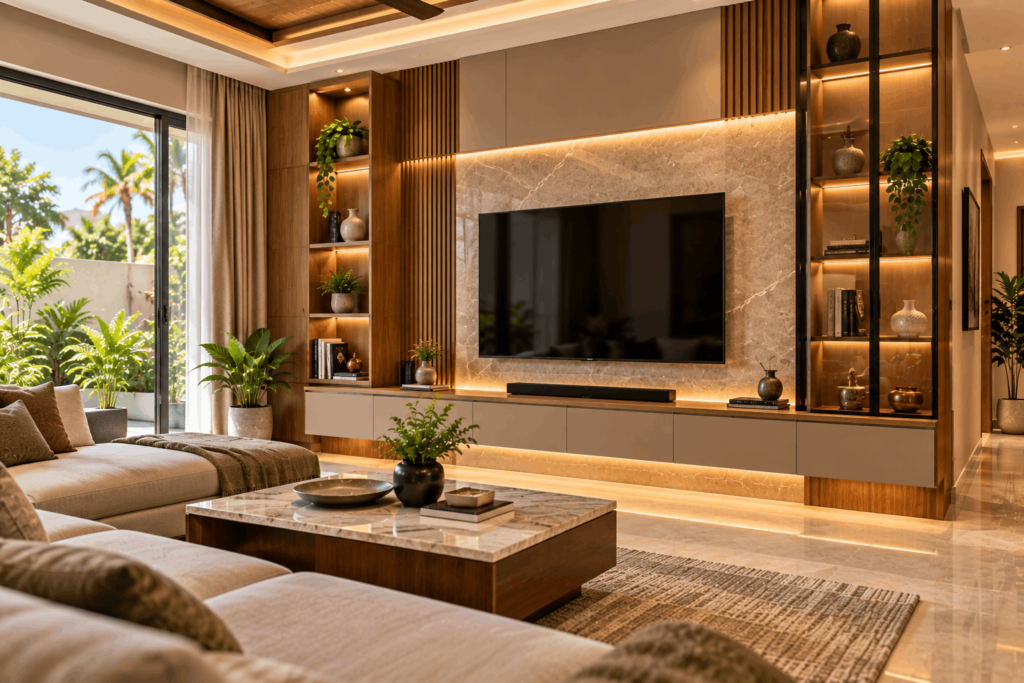
TV Cabinet Designs for Living Room: 7 Inspiring Ideas for Your Madurai Home (From Jayabharath Homes – Top Builders in Madurai) The TV cabinet is no longer just a stand—it’s the focal point of your living room. In 2026, modern Indian homes are moving away from bulky, boxy units toward sleek, space-saving, and storage-smart designs that blend seamlessly with contemporary interiors. At Jayabharath Homes, one of the top builders in Madurai, we understand that every detail matters when you’re designing your dream home. Whether you’re furnishing a spacious villa in Madurai or a compact apartment in Madurai, the right TV cabinet can elevate your living room’s aesthetics while keeping it clutter-free. Here are 7 inspiring TV cabinet design ideas tailored for modern Indian homes—complete with practical tips on materials, sizing, and layout. 1. Floating TV Console – Minimalist & Space-Saving Best for: Small to medium living rooms, modern apartments, minimalist interiors A floating TV console mounts directly to the wall, leaving the floor beneath completely open. This creates a sense of lightness and makes the room appear larger—perfect for compact spaces. Key features: Hidden drawers or cabinets for set-top boxes, gaming consoles, and remotes Integrated LED strip lighting for a soft ambient glow Cable management channels to keep wires out of sight Why it works in Madurai: Easy to clean underneath (no dust traps) Keeps the floor cool and airy in hot climates Modern look that complements contemporary villas in Madurai 2. Full-Wall Entertainment Unit – Maximum Storage + Style Best for: Large living rooms, family homes, luxury villas A full-wall TV unit spans the entire width of the wall, combining open shelves, closed cabinets, and a central TV niche. It’s ideal for families who need ample storage for books, décor, media devices, and more. Design tips: Use matte laminates or fluted panels for a modern, textured look Add a marble or stone-texture backdrop behind the TV for a premium feel Incorporate glass-front cabinets to display collectibles while keeping dust out Pro Tip: For walls wider than 12 feet, run the unit full-span to avoid a compressed look. 3. TV Unit with Study Table or Work Nook – Hybrid Functionality Best for: Compact homes, work-from-home families, multi-use living rooms With remote work becoming common, many homeowners now opt for a TV unit that doubles as a study desk. A slide-out or fold-down workstation integrates seamlessly into the cabinet, saving floor space. Benefits: No need for a separate home office in small apartments in Madurai Keeps work materials hidden when not in use Maintains a clean, unified aesthetic in the living room   4. Corner TV Cabinet – Smart Use of Awkward Spaces Best for: Small living rooms, L-shaped layouts, studio apartments A corner TV unit fits snugly into an unused corner, maximizing floor space and improving traffic flow. It’s a practical solution for homes where every square foot counts. Design options: Triangular or L-shaped consoles with open shelves Wall-mounted corner units for ultra-compact spaces Rotating TV mounts for flexible viewing angles 5. TV Panel with Fluted or Textured Backdrop – Designer Statement Best for: Modern, contemporary, and luxury interiors Instead of a plain wall, use a fluted panel, 3D texture, or wood-look cladding behind the TV to create a dramatic focal point. This trend is dominating 2026 interiors across India. Popular finishes: Vertical fluted MDF panels in walnut or oak tones Textured laminates in greige, charcoal, or muted olive Backlit panels for a soft, cinematic effect Why choose this: Adds depth and sophistication without extra furniture Works beautifully in both villas in Madurai and premium apartments 6. Modular TV Showcase with Open + Closed Storage Best for: Families who need flexible, customizable storage A modular TV showcase combines open shelves for display (plants, books, photos) with closed cabinets for hidden storage (wires, devices, clutter). This balance keeps the room looking tidy yet personalized. Customization ideas: Mix of open cubbies and drawer units Sliding shutters instead of hinged doors to save space Integrated planters or vertical gardens for a biophilic touch 7. Low-Profile TV Console with Media Tower – Clean & Functional Best for: Modern homes, open-plan living rooms, minimalist aesthetics A low-floor TV console sits close to the ground, creating a grounded, contemporary look. Pair it with a vertical media tower on one side for additional storage without visual bulk. Advantages: Keeps sightlines open—room feels more spacious Ideal for large-screen TVs (55–75 inches) Works well with high ceilings and open layouts common in modern villas in Madurai Materials Matter: What to Choose for Your TV Cabinet Material Pros Cons Best For Solid Wood (Sheesham, Mango) Durable, premium grain, long-lasting Expensive, can warp in humidity if not treated Luxury homes, traditional-modern fusion Engineered Wood (MDF/Particle Board) Cost-effective, smooth finish, moisture-resistant variants Edges can chip, less sturdy over wide spans Budget to mid-range homes, modular units Laminate Finish Wide color/texture range, easy to clean, monsoon-friendly Can look artificial if low-quality Most Indian homes, especially in humid climates Veneer (Wood Layer over MDF) Real wood look at lower cost, elegant finish Requires careful maintenance, can peel over time Premium apartments and villas Metal + Wood Combo Industrial-modern aesthetic, very sturdy Heavier, may not suit all decor styles Contemporary lofts, modern villas in Madurai Tip for Madurai homes: Choose moisture-resistant laminates or acrylic finishes to withstand humidity and monsoon seasons. Sizing Guide: How to Pick the Right TV Cabinet TV Size vs. Unit Width: The cabinet should be at least 6–12 inches wider than your TV on each side for visual balance. Viewing Height: The center of the TV should be 42–48 inches from the floor for comfortable seated viewing. Depth: Keep it 12–18 inches deep to accommodate devices without protruding too much. Ventilation: Leave 2–3 inches of gap behind the TV and devices for heat dissipation. For compact apartments in Madurai, consider wall-mounted or corner units to save floor space. Common Mistakes to Avoid ❌ Ignoring Cable Management Exposed wires ruin the clean look of even the most beautiful TV unit. Always

TV Cabinet Designs for Living Room: 7 Modern Ideas 2026 Read More »

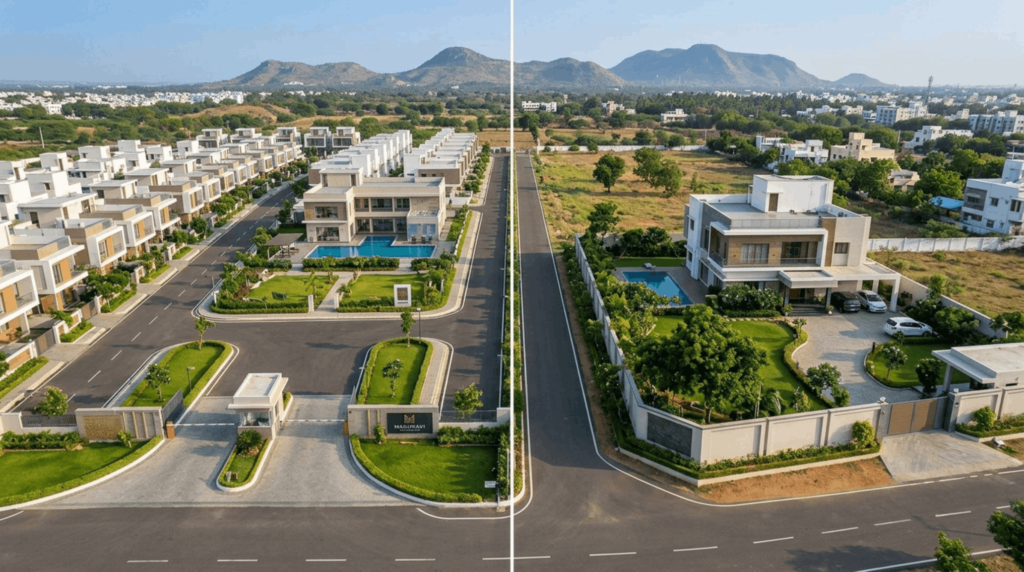
Split aerial view comparing a modern gated community with landscaped villas and shared amenities against a spacious independent house with a private garden, boundary wall, and driveway.

Gated Community vs Independent House: Which Suits You?

Gated Community vs Independent House: What Suits Your Family Best? Gated community vs independent house — this is probably one of the most common debates Madurai families have once they’re actually ready to buy, and honestly, there’s no universally “right” answer. Both come with real trade-offs, and what works for your neighbour’s family might not work for yours at all. Let’s go through it honestly, so you can figure out which one actually fits how you live. What you’re really choosing between Before getting into the details, it helps to frame this properly. You’re not just choosing a building style — you’re choosing a lifestyle. A gated community bundles security, shared amenities, and community living into the deal. An independent house gives you full control, privacy, and freedom to build or modify as you please. Neither is objectively better; it comes down to what your family actually values day to day. Security and peace of mind Gated communities almost always come with round-the-clock security, controlled entry points, and CCTV coverage — a real advantage if you have young kids who play outside, elderly parents at home alone during the day, or you simply travel often and want peace of mind while you’re away. Independent houses can absolutely be made just as secure, but the responsibility (and cost) of setting that up falls entirely on you. Amenities and shared spaces This is where gated communities really shine for families. A clubhouse, a play area for kids, walking paths, sometimes even a small gym or pool — these come built into the community, and you’d otherwise have to travel out for most of them if you lived independently. On the flip side, an independent house gives you a private garden or terrace that’s entirely yours, without shared usage or timing restrictions. Privacy and freedom to modify If you want full control over your home — extending a room later, designing your own layout, having a large private yard — an independent house wins here, hands down. Gated communities come with shared walls (in some layouts), common design guidelines, and rules around what you can and can’t change. For some families that structure is comforting; for others, it feels restrictive. Maintenance and upkeep Independent houses mean you handle everything yourself — repairs, cleaning common areas like the compound, security arrangements. Gated communities usually come with a maintenance fee that covers this collectively, which many working families find genuinely worth the cost, simply because it takes the day-to-day burden off their plate. Resale and rental value Gated communities, particularly well-planned ones with good amenities, tend to hold rental and resale value strongly — tenants and buyers increasingly prefer the security and lifestyle package. Independent houses can appreciate well too, especially on larger plots in growing localities, but the resale pool is sometimes narrower since not everyone wants the added responsibility that comes with it. So, which one actually suits your family? If you have young children, ageing parents, or you simply want a low-maintenance lifestyle with built-in security and community, a gated community is likely the better fit. If you value privacy, want full creative control over your home, and don’t mind handling upkeep yourself, an independent house probably suits you more. There’s no wrong choice here — just the one that matches how your family actually wants to live. Where we’re currently building If a gated community lifestyle sounds like the right fit, take a look through our ongoing projects in Madurai — we’ve got a few solid options depending on whether you want a villa or an apartment setting. Our gated community villas in Madurai project offers the independent-house feel with community security built in, which is often the best middle ground for families torn between the two. If an apartment community suits you better, Jayabharath Oscar City in Umachikulam and our best apartments in Madurai in Surya Nagar are both currently open for booking. Still torn between the two? Come talk to us — we’ll help you weigh it against your actual day-to-day life, not just a brochure comparison.

Gated Community vs Independent House: Which Suits You? Read More »

Split aerial view comparing a residential plotted layout and a premium gated villa community with landscaped roads and green spaces, highlighting two popular real estate investment options in Madurai.

Plots vs Villas in Madurai: Which Is the Better Investment in 2026?

Plots vs Villas in Madurai: Which Is the Better Investment in 2026? If you’ve got some savings set aside and you’re trying to decide where to put it, you’ve probably landed on the same fork in the road most Madurai buyers do — do you go for a plot and build later, or do you buy a ready (or under-construction) villa and skip the wait? Both are good options. Both make money for people. And honestly, the “right” answer depends less on the market and more on what you personally want out of the next 5-10 years. Let’s walk through it properly, not with a sales pitch, but with an honest look at both sides. The case for buying a plot There’s something appealing about buying land — it feels like the purest form of real estate investment, and in a lot of ways, it is. Appreciation tends to be stronger. Land itself doesn’t depreciate the way a structure does. A villa’s construction ages, needs maintenance, and its value is tied partly to how well it’s held up. A well-located plot, on the other hand, usually appreciates purely based on location and infrastructure growth around it — roads, schools, hospitals coming up nearby. You control the timeline. Buy now, build in three years when you’re financially ready, or don’t build at all and just resell later. There’s flexibility here that a completed villa doesn’t give you. Lower entry cost. Plots are generally cheaper to buy upfront than a fully built villa of comparable location and size, which makes them more accessible if you’re investing early in your career or want to diversify across more than one property. The catch: you’re on your own for approvals, construction planning, and the actual building process — unless the plot is part of a developed, approved layout that already comes with roads, drainage, and clear documentation handled for you. That last part matters more than people realize. A cheap plot in a poorly planned layout can turn into a legal or infrastructure headache years down the line. The case for buying a villa A villa is a different kind of investment — you’re not just buying land, you’re buying a finished lifestyle along with it. Immediate usability. You can move in, rent it out, or simply lock the door and walk away, knowing it’s earning rental value or appreciating as a complete asset. No years-long construction process, no dealing with contractors and material costs that keep climbing. Rental income potential. A villa in a good gated community can be rented out almost immediately, giving you a return while the property itself continues to appreciate — something a bare plot can’t offer. Community and amenities add real value. Villas that come with landscaped gardens, security, and clubhouse facilities tend to hold and grow their value better than standalone construction, simply because buyers are willing to pay a premium for that lifestyle package. The catch: villas cost more upfront, and a good chunk of that cost is the construction and amenities — which don’t appreciate the same way land does. You’re paying for convenience and lifestyle as much as you’re paying for the asset itself. So, which one actually wins in 2026? Honestly — it depends on your goal. If you’re investing purely for long-term capital appreciation and you’re comfortable waiting, a well-documented plot in a growing area usually gives you better returns per rupee invested. If you want a property that starts working for you immediately — either as a home or a rental — a villa makes more sense, especially with Madurai’s growing demand for gated community living. If you’re not sure yet, plots inside an established, approved layout give you the best of both — land appreciation now, with the option to build a villa later when you’re ready. One thing that matters regardless of which you choose: always confirm the DTCP and RERA approval status before committing money. A plot or villa without clean documentation can turn a great investment into a legal mess, no matter how good the location looks on paper. Our take We build both, so we don’t have a dog in this fight — we just want you to make the right call for your situation. Take a look through our ongoing projects in Madurai and you’ll see both directions represented. If a ready, low-maintenance villa lifestyle is what you’re after, our gated community villas in Madurai are worth a look — built around exactly the kind of community living we talked about above. If you’d rather go the apartment route with immediate rental potential, we’ve got two strong options: one of the best apartments in Madurai in Surya Nagar, and a well-planned apartment project in Umachikulam that’s currently open for booking. And if you’re still leaning toward land first and building later, come talk to us — we’ll walk you through the layouts we have that fit that plan too. Not sure which fits you better? Come talk to us — we’d rather spend twenty minutes understanding what you actually need than sell you the wrong thing.

Plots vs Villas in Madurai: Which Is the Better Investment in 2026? Read More »

Aerial view comparing a modern gated villa community and a DTCP-approved residential plotted layout in Madurai, highlighting villas, marked plots, wide roads, landscaped greenery, and planned infrastructure for real estate investment.

Plots vs Villas in Madurai: Which Is the Better Investment in 2026?

Plots vs Villas in Madurai: Which Is the Better Investment in 2026? If you’ve got some savings set aside and you’re trying to decide where to put it, you’ve probably landed on the same fork in the road most Madurai buyers do — do you go for a plot and build later, or do you buy a ready (or under-construction) villa and skip the wait? Both are good options. Both make money for people. And honestly, the “right” answer depends less on the market and more on what you personally want out of the next 5-10 years. Let’s walk through it properly, not with a sales pitch, but with an honest look at both sides. The case for buying a plot There’s something appealing about buying land — it feels like the purest form of real estate investment, and in a lot of ways, it is. Appreciation tends to be stronger. Land itself doesn’t depreciate the way a structure does. A villa’s construction ages, needs maintenance, and its value is tied partly to how well it’s held up. A well-located plot, on the other hand, usually appreciates purely based on location and infrastructure growth around it — roads, schools, hospitals coming up nearby. You control the timeline. Buy now, build in three years when you’re financially ready, or don’t build at all and just resell later. There’s flexibility here that a completed villa doesn’t give you. Lower entry cost. Plots are generally cheaper to buy upfront than a fully built villa of comparable location and size, which makes them more accessible if you’re investing early in your career or want to diversify across more than one property. The catch: you’re on your own for approvals, construction planning, and the actual building process — unless the plot is part of a developed, gated community layout that already comes with roads, drainage, and clear documentation handled for you. That last part matters more than people realize. A cheap plot in a poorly planned layout can turn into a legal or infrastructure headache years down the line. The case for buying a villa A villa is a different kind of investment — you’re not just buying land, you’re buying a finished lifestyle along with it. Immediate usability. You can move in, rent it out, or simply lock the door and walk away, knowing it’s earning rental value or appreciating as a complete asset. No years-long construction process, no dealing with contractors and material costs that keep climbing. Rental income potential. A villa in a good gated community can be rented out almost immediately, giving you a return while the property itself continues to appreciate — something a bare plot can’t offer. Community and amenities add real value. Luxury villas in Madurai that come with landscaped gardens, security, and clubhouse facilities tend to hold and grow their value better than standalone construction, simply because buyers are willing to pay a premium for that lifestyle package. The catch: villas cost more upfront, and a good chunk of that cost is the construction and amenities — which don’t appreciate the same way land does. You’re paying for convenience and lifestyle as much as you’re paying for the asset itself. So, which one actually wins in 2026? Honestly — it depends on your goal. If you’re investing purely for long-term capital appreciation and you’re comfortable waiting, a well-documented plot in a growing area (places like Surya Nagar or Thuvariman have shown strong movement) usually gives you better returns per rupee invested. If you want a property that starts working for you immediately — either as a home or a rental — a villa makes more sense, especially with Madurai’s growing demand for gated community living near areas like Mattuthavani and Surya Nagar. If you’re not sure yet, plots inside an established, approved layout give you the best of both — land appreciation now, with the option to build a villa later when you’re ready. One thing that matters regardless of which you choose: always confirm the DTCP and RERA approval status before committing money. A plot or villa without clean documentation can turn a great investment into a legal mess, no matter how good the location looks on paper. Our take We build both, so we don’t have a dog in this fight — we just want you to make the right call for your situation. If you’re leaning toward land, our plots and layouts in Madurai come fully DTCP and RERA approved. If you’re leaning toward a ready home, our villa projects across Madurai are designed with exactly the kind of community planning that holds its value over time. Not sure which fits you better? Come talk to us — we’d rather spend twenty minutes understanding what you actually need than sell you the wrong thing.

Plots vs Villas in Madurai: Which Is the Better Investment in 2026? Read More »

3BHK Villas in Madurai | Top Builders in Madurai | Best Builders in Madurai | builders in madurai with price | Best Building Constructors in Madurai

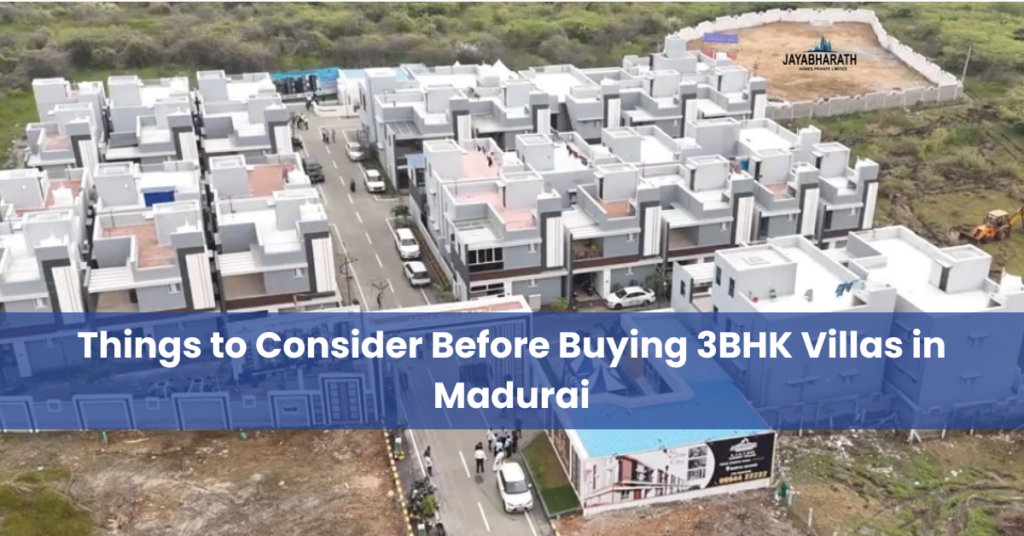
Things to Consider Before Buying 3BHK Villas in Madurai

Things to Consider Before Buying 3BHK Villas in Madurai 3BHK villas in Madurai have become one of the most preferred residential choices among families looking for spacious, comfortable, and future-ready homes. Modern homebuyers are no longer selecting properties based only on size or location; they are focusing on quality construction, functional layouts, lifestyle convenience, and long-term value. A 3 BHK home provides the right balance of private space and shared family areas, making it suitable for growing families, working professionals, and buyers planning permanent settlement. The demand for 3 BHK Homes in Madurai has grown as families look for homes that can support changing lifestyle needs. Additional bedrooms provide flexibility for children, elderly family members, guest rooms, or dedicated workspaces. This practical advantage has made Villas in Madurai and spacious residential homes more attractive compared to compact living spaces. Buyers are also exploring options such as 3 BHK Villas in Madurai for Sale because they offer independence, privacy, and better long-term usability. As one of the established Real estate builders in Madurai, Jayabharath Homes focuses on creating residential spaces that match modern family expectations. With a focus on comfort, thoughtful planning, and quality living, Jayabharath Homes continues to meet the growing demand for spacious 3 BHK residential options in Madurai. Why Families Prefer Spacious 3 BHK Homes The increasing popularity of 3BHK villas in Madurai is strongly connected to the changing requirements of modern families. Homebuyers today want residences that provide more than basic accommodation. They look for spacious interiors, better ventilation, privacy, and flexible usage of rooms. This is why searches for 3 BHK Individual Houses and 3 bhk individual houses for sale continue to increase among buyers who want independent and comfortable living environments. A 3 BHK layout gives homeowners the flexibility to create spaces according to their lifestyle. One room can be used as a children’s bedroom, another as a guest room, workspace, or personal area. This flexibility has also increased demand for Independent Villa for sale in Madurai and Gated community villas for sale in Madurai, especially among families looking for privacy along with community benefits. Jayabharath Homes understands these changing buyer preferences and focuses on delivering homes that support everyday comfort. For buyers comparing New villas for sale in Madurai and Villas in Madurai for sale, choosing a trusted builder plays an important role in ensuring quality, design efficiency, and long-term satisfaction. Key Factors Before Buying 3BHK Villa in Madurai Before choosing 3BHK villas in Madurai, buyers should evaluate important factors such as builder reputation, construction quality, location convenience, space planning, and future value. Purchasing a home is a major decision, and understanding these aspects helps buyers select a property that supports both present lifestyle needs and long-term goals. Many families compare 3 BHK Villa for sale in Madurai and 3 BHK House for sale in Madurai options before making their final decision. Space utilization is another important factor. A well-designed 3 BHK home should provide comfortable bedrooms, functional common areas, and practical layouts that improve everyday living. Buyers looking for 3 BHK Independent House for Sale in Madurai often prioritize homes that provide privacy while still offering accessibility to important facilities. With years of experience in residential development, trusted builders in Madurai like Jayabharath Homes focus on delivering quality homes designed for evolving family requirements. For buyers searching for reliable and spacious living options, selecting the right builder becomes as important as choosing the right home. Why 3 BHK Homes Offer Better Comfort for Modern Living The preference for 3BHK villas in Madurai continues to grow because buyers today are looking for homes that provide long-term comfort, flexibility, and better space management. A home is no longer viewed only as a place to stay; it has become an important part of lifestyle, family growth, and future planning. Compared to smaller configurations, 3 BHK Homes in Madurai provide additional space that can adapt to different requirements over time. Families can use the extra rooms for children, parents, guests, home offices, or personal activity spaces without compromising comfort. This flexibility is one of the major reasons why many buyers prefer spacious homes when planning a long-term residential investment. The demand for Luxury Villas in Madurai and Luxury villas for sale in Madurai has also increased because buyers now expect privacy, better planning, and improved living experiences. Independent homes provide greater freedom compared to compact residences, making them attractive for families who value personal space. Buyers exploring 3 BHK Villas in Madurai for Sale often consider factors such as room size, ventilation, layout efficiency, and overall construction quality before making a decision. Jayabharath Homes focuses on creating residential spaces that match these changing expectations by combining practical layouts with quality construction. For families searching for premium homes in Madurai, choosing a reliable builder helps ensure a comfortable living experience and long-term value. Choosing Between Villas and Apartments in Madurai When searching for 3BHK villa in Madurai, many buyers also compare different residential options such as villas, apartments, and independent houses before making a decision. Each home type serves different lifestyle needs, but the preference for spacious living has increased the demand for villas and independent homes. Buyers looking at 3 BHK Flats in Madurai and 3 BHK Apartment in Madurai often compare factors such as space availability, privacy, maintenance, and future requirements before finalizing their choice. Apartments can be suitable for certain lifestyles, while villas and independent homes provide additional advantages such as private space, flexible usage, and a stronger sense of ownership. This is why many families searching for 3 BHK Individual Houses and 3 bhk individual houses for sale prefer homes that allow more independence. Buyers also compare 3 bhk individual houses price and available features to understand the overall value they receive. A well-planned 3 BHK home can support changing family needs better over time. As one of the experienced Real estate builders in Madurai, Jayabharath Homes understands that every family has different expectations. Buyers looking for spacious family homes in Madurai can

Things to Consider Before Buying 3BHK Villas in Madurai Read More »

best builders in madurai for 3bhk best builders in madurai builders in madurai top builders in madurai

Best Builders in Madurai for 3BHK Homes – Price, Locations & Trusted Choices

Best Builders in Madurai for 3BHK Homes – Price, Locations & Trusted Choices builders in Madurai continue to play a major role in shaping the city’s residential growth, especially for families looking at spacious 3BHK homes that combine comfort, location advantages, and long-term investment value. The demand for best builders in Madurai for 3bhk homes has increased because modern buyers now prioritize planned layouts, secure surroundings, and reliable construction quality over standalone developments. As the Madurai real estate market expands, homebuyers compare villas in Madurai, apartments in Madurai, and independent homes to find properties that match lifestyle expectations without compromising on infrastructure. Trusted developers are now focusing on residential communities where connectivity, design, and future resale value align with buyer needs. Many top builders in Madurai understand that 3BHK homes are preferred by growing families seeking flexible living spaces and better privacy. Unlike compact units, these homes allow efficient room planning and improved ventilation, making them ideal for long-term residential use. Buyers also evaluate promoters in Madurai based on transparency, project delivery consistency, and construction standards, which directly influence purchase decisions. The rise of gated communities has further strengthened demand, as buyers increasingly prefer organized layouts over isolated properties in Madurai. When evaluating the best builders in Madurai for 3bhk, consistency and trust become critical factors, especially for buyers investing in premium homes designed for modern living. Jayabharath Homes contributes to this growing segment by focusing on quality-driven developments that balance functionality and location benefits while meeting the expectations of today’s Madurai homebuyers. Price Trends and Location Advantages for 3BHK Homes Choosing the best builders in Madurai for 3bhk homes often begins with understanding pricing trends and how location impacts long-term property value. Buyers compare villas in Madurai, apartments in Madurai for sale, and emerging residential zones to identify projects that offer practical pricing without compromising quality. The best builders in Madurai structure projects based on accessibility, infrastructure growth, and future appreciation potential, ensuring that 3BHK homes remain attractive for both end-users and investors. Well-connected locations close to schools, healthcare facilities, and transport routes continue to dominate buyer preference. Reliable properties in Madurai developed by established promoters in Madurai usually offer better planning, legal clarity, and stronger resale potential. Jayabharath Homes understands that pricing transparency and location relevance are key decision factors for families searching for spacious 3BHK living options. As demand grows for gated community villa builders in Madurai, developers are increasingly focusing on layouts that provide privacy, open spaces, and long-term livability while maintaining competitive pricing structures. Beyond pricing, the role of top builders in Madurai extends to ensuring sustainable construction practices and efficient land utilization. Buyers now look beyond square footage and evaluate overall lifestyle value, including infrastructure quality and community planning. This shift has positioned well-planned residential developments as preferred choices for those seeking dependable 3BHK homes in Madurai’s expanding real estate landscape. Trusted Builders and the Future of 3BHK Living in Madurai The rise in demand for the best builders in Madurai for 3bhk reflects a larger shift toward professionally developed residential communities designed for modern family living. Buyers today evaluate builders in Madurai based on past project delivery, construction standards, and long-term credibility rather than short-term pricing alone. Villas in Madurai and apartments in Madurai are increasingly being developed within structured communities that emphasize safety, design consistency, and lifestyle convenience. As the market evolves, trusted promoters in Madurai play a significant role in shaping sustainable residential environments. For many buyers, choosing among top builders in Madurai involves comparing project quality, layout efficiency, and future resale value. Gated community villa builders in Madurai continue to gain attention because they offer organized infrastructure and enhanced living experiences compared to standalone developments. These factors influence how families select 3BHK homes, especially when planning for long-term ownership and stability in properties in Madurai. A well-planned residential approach supported by best builders in Madurai ensures that buyers receive dependable construction and thoughtful community design aligned with evolving urban needs. Jayabharath Homes focuses on delivering residential projects that combine quality construction, strategic locations, and practical layouts, helping homebuyers secure long-term value while investing confidently in Madurai’s growing real estate market. Why 3BHK Homes Are Driving Demand Among Builders in Madurai The rising demand for the best builders in Madurai for 3bhk homes is largely driven by changing lifestyle expectations among modern families who prefer spacious layouts over compact units. As residential preferences evolve, builders in Madurai are increasingly focusing on 3BHK formats that offer flexibility for work, family life, and future expansion. Compared with smaller apartments in Madurai, 3BHK homes provide better privacy and functional room distribution, which makes them suitable for long-term living. Buyers evaluating villas in Madurai and premium apartments now look for balanced designs that combine comfort with practical usability, making this segment one of the fastest-growing categories in the local market. The role of top builders in Madurai has become more significant as buyers expect structured communities rather than isolated homes. Organized developments offer better infrastructure planning, internal roads, and efficient land utilization, helping properties in Madurai maintain long-term value. Promoters in Madurai who focus on planned residential layouts are gaining trust because they deliver consistent construction quality and predictable project timelines. This shift toward organized living has increased demand for gated community villa builders in Madurai who can provide both lifestyle advantages and investment security. When homebuyers compare the best builders in Madurai for 3bhk, they often prioritize reliability, location planning, and construction standards over short-term cost savings. Jayabharath Homes contributes to this evolving residential trend by developing thoughtfully designed communities that align with modern expectations while supporting sustainable urban growth in Madurai. Comparing Villas and Apartments for 3BHK Homebuyers Homebuyers searching for the best builders in Madurai for 3bhk often compare villas in Madurai with apartments in Madurai for sale to determine which option suits their lifestyle and financial goals. Villas usually provide greater privacy, land ownership benefits, and open spaces, while apartments offer shared amenities and easier maintenance. The decision depends on

Best Builders in Madurai for 3BHK Homes – Price, Locations & Trusted Choices Read More »